by Heather T. | Aug 10, 2026 | Blog, Non-profit, Nonprofit, Nonprofits, Observations, Operations
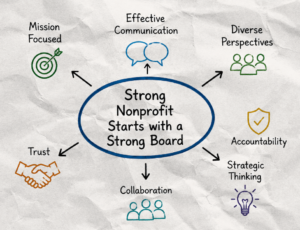 I’ve been doing a lot of consulting and providing feedback recently, both through my own business and through free nonprofit business mentoring. Board dynamics, IMO, are something that can help or very much hinder the organization and running of a nonprofit. I have seen the gamut, from healthy boards where the Executive Director is in the loop on everything to seriously dysfunctional boards with lots of infighting, cliques, and miscommunication between not just board members but board and staff, and vice versa.
When working with dysfunctional boards, I’ve found doing a S.W.O.T. analysis of both board makeup and, separately, board dynamics very helpful. I also like to have board members do an individual S.W.O.T. on themselves. Most people find it quite eye-opening when they start to analyze themselves strategically.
I also find anonymous surveys very helpful, especially if it’s a bigger board and have the executive committee review it or have an external source review (recommended for nonbias). For a smaller board especially, have someone who does not have does not have a stake in any outcomes or doesn’t have direct involvement in the board, be the evaluator and aggregator of information so that any identifiers (even if anonymous) are stripped out.
I put these questions into Google Forms and have it set so that email addresses are not collected to maintain anonymity.
The full document and questions are way over the average length of what I would usually suggest for a survey, so either let people know upfront that it’s long and to set aside time specifically for it, typically, it takes between 20 minutes and half an hour to fill out fully, or break it into several smaller surveys so it can be “digested” separately.
The funny thing is, the last time we broke it up individually for a board I was working with, the board balked at doing the whole thing at once, but almost everyone sat down and did all the separate surveys at the same time. Perception is such an interesting thing.
The survey covers:
- Overall Board Effectiveness
- Board Composition & Recruitment
- Meetings
- Board Culture
- Mission and Direction
- Board Leadership
- Executive Oversight
- Individual Participation
- Committees
- Governance
- Looking Forward
Some tips: If you do use Google Forms for this, the repeated question, “If you answered Neutral, Disagree, or Strongly Disagree, can you elaborate on why you selected that rating?” make these all required or at least the Disagree, or Strongly Disagree. Finding out the good, the bad, and the ugly is the first step in figuring out where to start to make a more cohesive and productive board.
Test the form several times for usability and to make sure choice selections work. If you have never used Google Forms before (it’s free), there are some great walkthroughs and tutorials at Google’s Forms training pages.
Please feel free to take and adapt this to suit your nonprofit’s needs. This has been tested for use before and works well at digging into the matter when it comes to boards helping to identify their strengths and address areas that need improvement.
by Heather T. | Jul 14, 2026 | Books, Business, Food, Observations, restaurants
 I wrote this chapter for my book Outsmart, Outserve and Order Up!: Guerrilla Marketing Tactics for Culinary Operators last year with the intention of simply getting the ideas out of my head and down on paper and haven’t spent the time promoting it, but given the current economic pressures facing today’s restaurants, I thought it might be helpful to share it with restaurant operators looking for ideas on how to incentivize and retain staff and managers.
General Manager, Front of the House Manager, Bar Manager, and Back of the House Manager Incentive Ideas:
What do you do as an owner when you find a manager who’s on the ball? You’ve got a keeper. So how do you keep the keeper? Give them a reason to think like an owner, not a manager, who is just clocking in hours.
Too many restaurants measure their managers on food cost, bar sales and keeping labor costs down. Those definitely matter, but you can cut costs and micromanage an establishment down to the last onion, but that doesn’t help increase business.
By giving your management a stake in the business that’s tied into your restaurant’s financial success you will help motivate and keep those keepers engaged.
Trusting managers to help increase sales and take a stake in the business also shows them you don’t just want someone to manage, you want someone to get involved. Financially rewarding them for increases in business as a result of new catering contracts, group reservations, events, and local business partnerships gives them a personal interest in making sure the business does well, because it puts more money in their pockets.
Having motivated managers and staff changes the entire culture of your restaurant: upsells become second nature, staff is more likely to offer better service, and the energy changes from just going from shift to shift and “showing up” to actively being involved.
If you are going to start an incentive program, here are a few tips:
Start small and test to see whether it’s enough of an incentive for management and staff to make that extra effort. Don’t over promise and not deliver. When onboarding staff, involve them and educate them on the incentives from day one.
Do some call outs when staff (not managers) hit their numbers and don’t single out employees who don’t make progress. Ask questions of the ones not making progress. Why? Is it not enough of an incentive? Is it too hard? Other? Many years ago I had an incentive program for my wait staff to upsell our wine list and I had one newer server that just wasn’t hitting the numbers that everyone else was. In sitting down with her and asking, she was a pretty shy person and just didn’t feel comfortable asking customers for the upsell and wasn’t confident in her wine knowledge. I paired her with a very experienced server who was very knowledgeable about wine and very patient and encouraging. Her confidence level increased within a few months, and she was hitting roughly the same numbers as other waitstaff.
There is an extra takeaway from this about the importance of staff training. You can’t ask a waitperson to upsell the steak au poivre if they don’t know what it tastes like. In restaurants where I was the chef, I made sure all the front of the house staff tasted all the dishes and all the daily specials so they knew what was in them. It gave them the opportunity to ask questions and then they knew what they tasted like. A fan of a certain pasta dish might sell more than a fan of the shrimp dish, but you also make more money on pasta. Educating staff about the wines and beers on your menu increases your sales as well as their tips.
You can also apply some of the following incentives to general staff.
Profit Sharing Bonus
Tie in quarterly bonuses to net profit increases. Include a baseline to ensure rewards only trigger when sales growth happens. Always define profit clearly gross vs. net.
Example: Fixed Percentage of Net Profit Over Base
Incentive: If quarterly net profit exceeds $50,000 (the base), manager earns 5% of the profit above that threshold.
Results:
Net profit = $65,000
Bonus = 5% of $15,000 = $750
Example: Tiered Profit Sharing Bonus
Incentive: 3% bonus if profit increases 5–9% over baseline
Incentive: 5% bonus if profit increases 10–14%
Incentive: 7% bonus if profit increases 15%+
Results:
Last year Q2 net profit = $40,000
This year Q2 = $46,000 (15% increase)
Bonus = 7% of $46,000 = $3,220
Example: Shared Team Pool Bonus
Incentive: 10% of any net profit increase is split 60/40 between the GM and assistant manager(s).
Results:
Net profit grew by $20,000
10% = $2,000 bonus pool
GM receives $1,200; AM(s) split $800
Example: Hybrid Base + Profit Kicker
Incentive: Guaranteed $1,000 quarterly bonus + 2% of any net profit over a set target.
Results:
Net profit = $70,000, baseline = $50,000
Bonus = $1,000 + (2% of $20,000) = $1,400
Sales Target Bonuses
Tiered bonuses for surpassing sales goals, weekly, monthly, or quarterly. Key is to make them achievable
Example: $500 for 5% sales increase, $1,000 for 10%.
Menu Item Upsell Incentives
Rewards based on the sales of featured or high-margin items.
Example: For the month of June, the restaurant features a high-margin appetizer—Truffle Parmesan Fries.
Goal: Sell at least 300 orders in June.
Incentive: If the manager’s team sells 300+, the manager earns a $300 bonus.
Additional (optional) Bonus: For every 50 orders beyond 300, the manager earns an extra $50.
Online Review Score Bonus
Base a portion of your manager’s bonus on maintaining or improving Google/Yelp/Tripadvisor reviews AND scores.
Example: The restaurant’s current Google rating is 4.2 stars with 300 reviews.
Base: Maintain or improve rating to 4.3 stars or higher by quarter’s end.
Volume Goal: Receive at least 40 new reviews in the quarter (to show active engagement).
Incentive: If both goals are met, the manager receives a $500 bonus.
Staff Retention Bonus
Rewards low turnover and/or high engagement.
Example: At the start of the quarter, the restaurant has 12 employees. The manager is eligible for a bonus if 10 or more of the original team are still employed at the end of the quarter.
Incentive: $100 bonus per retained staff member beyond the threshold of 10.
Bonus Cap: $400 maximum per quarter.
Equity or Phantom Equity (for long-term retention)
For key managers, offering a small equity stake or phantom shares tied to company valuation or eventual sale.
Example: A general manager is granted 0.5% phantom equity in the restaurant group, with a 3-year vesting schedule.
Terms: No actual ownership or voting rights. If the business is sold or hits a $5 million valuation, the phantom
shares pay out as if the manager owned 0.5%.
Incentive: Business sells after 4 years for $6 million. Manager receives 0.5% × $6M = $30,000 payout.
Operational Efficiency Bonus (for BOH but GM can be tied in if overseeing)
Reward cost-saving without quality loss, like lowering food waste or optimizing labor costs. Use benchmark comparisons (e.g., % food cost below target).
Example: The restaurant sets a quarterly food cost target of 30% of sales. If the kitchen maintains 28% or lower without guest complaints or quality issues:
Incentive: Kitchen manager earns $400
GM Incentive: If GM oversees BOH and labor costs also come in under 20%, they earn an additional $300
Health & Safety Compliance Bonus
Quarterly bonuses tied to clean inspection scores, safety checklists completed on time, or zero incident reports.
Example: The restaurant undergoes two unannounced health inspections per year.
Base: Score of 90 or above on each inspection.
Incentive: $250 bonus for a passing score over 90. $500 if the location scores 95 or higher
A clean review (no critical violations) across both inspections triggers an additional $250 annual bonus
Innovation Recognition (this is a good one for all employees)
Managers who introduce ideas that improve systems, training, scheduling, or guest experience yet does not have to be tied to immediate profit. Could be small cash rewards or public recognition.
BOH Example: A shift manager develops a color-coded prep station system that reduces kitchen confusion and improves order accuracy during rush hours.
Result: Fewer ticket errors and a noticeable drop in kitchen staff stress.
Incentive: The manager receives a $150 cash bonus and is recognized in the company newsletter as
“Innovator of the Month.”
FOH Example: A FOH manager creates a “Last Ten Feet” service protocol, training hosts and servers to give personalized send-offs at the door (e.g., using names from reservations, asking about the meal).
Result: Google reviews mentioning “warm goodbye” increase by 30% over the next two months.
Incentive: Manager receives a $200 bonus and a framed certificate labeled “Service Innovation Spotlight,” displayed in the entryway.
Community Engagement Bonus
Bonus if the manager successfully coordinates community events or local partnerships that drive traffic or visibility.
Example: manager investigates partnership with a local animal shelter to host a “Pints for Paws” event, where $1 from every beer sold supports pet adoptions. The event is promoted through the restaurant’s and the nonprofit organization’s social media and draws over 200 attendees with a 25% increase in Sunday sales.
Incentive: Manager earns a $300 bonus for executing a successful event that increased traffic and local visibility.
If the event becomes a recurring partnership, the manager qualifies for an annual $500 community builder bonus.
Milestone Celebrations (this is a good one for all employees)
Rewards long-term retention and loyalty with anniversary bonuses at 1, 3, 5, 10 years.
Examples:
1 Year: $250 bonus + handwritten thank-you note from ownership
3 Years: $500 bonus + one extra paid day off
5 Years: $1,000 bonus + engraved plaque on the “Wall of Commitment”**
10 Years: $2,500 bonus + weekend getaway package for two**
**Recognized at a staff thank you luncheon and spotlighted in some social media posts.
Education Stipends
Covers part of the cost of hospitality certifications, management training, or culinary or F&B coursework contingent on performance benchmarks.
Example: A floor manager expresses interest in completing a Hospitality Leadership Certificate offered online for $800 from Cornell.
Eligibility Criteria: 6+ months in the role, past two performance reviews rated “Exceeds Expectations”. Employee commits to staying with the company for 12 more months.
Incentive: Restaurant covers 75% of the course cost ($600) upon enrollment, with the final 25% reimbursed after successful completion.
Training Completion Rewards
Bonuses for completing leadership or skill-based training modules
Example: $150 per training completed, like ServSafe, TIPs training, or other hospitality and F&B training that can enhance the operation. Additional points ($ or other incentive) for high scores.
Customer Loyalty Program Growth
Bonus for increasing sign-ups or usage of customer loyalty programs
Example: $200 for 100 new loyalty sign-ups
Holiday/Event Performance
Bonus/extra pay for exceeding targets during peak seasons or holidays
Seasonal or Event-Based
Example: $250-$750 depending on event results, size and $$
Example: New Year’s sales of Champagne splits are targeted at selling 23 bottles for a 120 seat restaurant, hit the target, receive a bonus, exceed the target by X number of bottles, receive an extra bonus.
© Heather Turner 2025 Outserve, Outsmart and Order Up! Guerrilla Marketing Tactics for Culinary Operators. ISBN 979-8989925025
by Heather T. | Jun 11, 2026 | Blog, Food, Observations, restaurants
 I wrote a post Interview tips for chefs and cooks almost 16 years ago and quite a bit has changed since then but the topic is still being looked for as it’s one of the top traffic posts on my old blog. The post: Resume Writing Dos and Don’ts for Chefs and Cooks (written shortly prior to the above referenced post) was also a high performing post and I thought it was time to do a bit of an update on.
The basics I had covered prior still remain the same, but there are new things to think about since this was written. With the rise of more social media platforms and the use of AI, it’s a whole new world out there. While more experienced hospitality people may know all of this, I hope for anyone just starting out in the industry this is helpful.
The original post started because there was a discussion on a website called Cookwork.com (which is now no longer online) and it reminded me of what comes up frequently in discussions when I mentor young people thinking about going into the culinary industry: the old standby, writing a culinary resume.
Your resume is the first step to getting in the door to be interviewed, so you need to make it count.
Dos
Be Specific: If you worked the grill station or the sauté station, don’t just put: “Jane Doe Restaurant, December 12, 2005–October 15, 2006, Line Cook, I worked the grill station.”
What else did you do there? Any ordering? Did you check in orders? Did you help with inventory? Did you work any other parts of the line, even for brief stints? How many average covers did you do? What type of restaurant was it? If you worked grill, were you cooking fine dining, i.e., grilling ribeyes and salmon, or were you flipping burgers at a family-style restaurant? Did you expedite? Did you give direction to prep cooks or other staff? The more information you put, the more chance the person or persons reading your resume will see that you have done more than just “working the grill.”
Invest in some quality stationery if you are going for an in-person interview or mailing it; it will make your resume stand out from the crowd. While most places are accepting resumes by email or through digital formats where you either cut and paste your information into it or it gets pulled from a LinkedIn profile (if you have one), there is still the power of a good first impression.
While dropping off a resume is old school, there are still some small restaurants that do take them. Even if you have emailed or submitted a resume through an online portal, in my opinion it doesn’t hurt to follow up. It’s always a good idea to bring a good copy for a job interview too, first impressions count.
I mentioned investing in some quality paper for your resume and I shouldn’t have to mention this, but I will: dress up a little. You never know if you might end up talking to the manager or owner if you drop in unannounced, and this should go without saying, don’t drop in in the midst of the lunch rush or right before dinner starts. The 2:00–3:30 PM window is the sweet spot for lunch/dinner.
When I ran kitchens, I would occasionally have someone drop off a resume on their way to or from a cooking job while wearing their chef whites. Whether clean or not, wearing your chef whites (pants can sometimes be excused, but not a chef’s coat) out of the kitchen can leave not the best first impression on a potential employer. If your potential employer runs around with his or her whites on while out and about, you’re probably safe, but not all employers think like that. My first impression of a chef or cook roaming around (like pumping gas) with their whites on is, “Lovely cross-contamination we have got going on there…” when I see them.
And I will be the first one to admit, when I was in my late teens working in restaurants and very early twenties, before I knew any better, I thought grocery shopping or just running around in public outside of the restaurant environment with my chef’s coat on looked cool, until I worked for a chef that gave me a serious dressing down about it, but also took the time to explain from a sanitation perspective!
Don’t neglect your cover letter. Some online portals unfortunately don’t let you upload a cover letter, but the workaround is to combine it in the same document as your resume. Cover letters give you the opportunity to elaborate more: why did you get into the business, where do you want to end up someday, or what your passions are? It helps if you use the cover letter as a way to elaborate and enhance what is on the resume, versus just cloning the information and adding some wording around it.
I remember one of the best cover letters I ever got was when I was hiring for a sous chef many years ago. The applicant had not had management experience (yet) but was clearly very eager to learn and was straightforward about it, saying, “I want to own my own restaurant in the next 15 years.” The cover letter was real, it was honest and it wasn’t competing for my job right off the bat, and it didn’t regurgitate his resume, it enhanced it. He was one of the best hires I’ve ever made and he followed me to another restaurant when I got another job offer a few years later. He did end up owning his own restaurant eventually. It took a little longer than 15 years, but he successfully ran it for a few years and then went into catering so he could spend more time with his family.
Career gaps happen. Sometimes it’s not just from job loss and time spent job hunting, sometimes it’s an illness or a family member’s illness, and sometimes it’s because you are considering a career change. While I have seen some gaps put in as “self-employed” or “freelance,” unless you were actually doing that, it can come back and bite you in a job interview. If the gap was for a specific reason, I’ve found it does help to be direct. “Planned career break” or “Caregiving” or “volunteering or nonprofit work” (make sure you list it) or “Took courses, certifications or bootcamps” (and again, make sure you list anything). When it comes to being laid off, this is not something to be embarrassed about. It happens. I wouldn’t include it in a resume but might in a cover letter and be prepared to talk about it.
I’ve seen some career articles and posts (and AI suggests it if you ask) recommend putting month-to-month or year-to-year dates to close gaps between jobs. For example, you left one job in June and found another job in September. The suggestion being end one job in July and begin another in August. Yes, it does look better on a resume, but what happens when that information gets checked?
Many HR and hiring people do look at people’s LinkedIn accounts (I absolutely do when vetting people) and compare them to a resume. Mismatches of dates and job descriptions cause red flags, so make sure your resume matches your LinkedIn profile.
Run spell-check, and then run it again, and THEN run it by an English major if needed. AI can certainly help proof things in a pinch, BUT be wary of it not understanding restaurant terminology or rewording things that may not necessarily mean what you put in originally. Spell-check does not catch everything! Your future employers won’t be impressed with a resumah with mispeled wurds and in my own case I tend to duplicate words or have misplaced verbs sometimes because of neurodivergence (I prefer neuro spicy) and that often doesn’t get caught.
If you have computer knowledge, list it and the programs you know as well. While you might be interviewing for a line cook or sous chef position where you may not be using a computer at first, think long term (because your potential employers will be). If you get promoted, you may be asked to program or change information in the POS system or use Excel to manage inventories or scheduling. More and more POS programs integrate inventory control into their systems.
If you have certifications or other relevant experience that is not directly job-related but is industry-related, list it. As a potential employer, I want to know if you have your current and up-to-date ServSafe certification and T.I.P.S. training, for example.
List any memberships you have if they are industry-related. Are you a member of the ACF? Did you belong to a food and wine club at your high school or college? As a potential employer, I like to know that you are interested and involved in the industry.
Make sure your typeface is clean and easily readable. While calligraphy fonts are beautiful, they can also be very hard to read.
Customize your resume for each employer. A resume for a corporate job should not be the same as one for a small fine dining restaurant. Heavily research your targets and the job you are applying for, and customize accordingly. This can also include rearranging the order in which you list your categories. For a corporate-type job, you may want to list your schooling and certifications first and then your job experience, whereas for a small restaurant that is looking for a saucier, your job information should come first. Especially any information such as being a saucier should be highlighted.
It’s suggested in most professions not to list all your job experience. In the case of the hospitality industry, I don’t necessarily agree with that. More than 20 years back is a bit much, but you may want to list places you worked and job titles and if you are looking for upper management roles, I’ve been finding age is less of an issue than in other industries, especially ones where you are dealing with a lot of paperwork and management duties. The restaurant industry has much more variety than many other industries, such as computing. As a potential employer, I would want to know that 15 years ago you worked at an Asian restaurant rolling sushi.
Keep your resume to two pages or less if possible. A third page can be used as a promo page if you use it for “extra” information, i.e., any culinary awards you have won or if you were written up in news or other media. Be careful of being too self-promotional, though. But it can be a relevant push for a callback, depending on where you are applying. As an employer at a high-end seafood restaurant, the fact that you won the Boston ACF Seafood Challenge for three years running gives you some positive points in my book.
When using phrases like “Increased table turnovers” and “Improved food cost,” give specifics, i.e., “Improved food cost by 12% by re-sourcing vendors over a six-month time period.” (This goes for writing your cover letter as well.) Give specifics. Numbers are important; otherwise, it’s just empty hype.
“References available on request” is a bit outdated and yet I still see it show up on resumes. If you have references, give them with the resume/cover letter. As someone who influences hiring, I’m still going to call your last 3 to 4 jobs regardless of whether you gave them as a recommendation or not, and depending on whom the recommendations are from, I may selectively call them and I will certainly drill into how they know you. Was it a professional relationship or is this a buddy? It’s pretty easy to tell when you ask pointed questions.
If you are just starting out and don’t have job references yet, ask high school teachers and other adults who are business owners who know you if you can use them as references. If you are just graduating from culinary school, many culinary teachers are happy to write letters of reference as well if you are an exceptional student.
Do be persistent and follow up. If you mailed or emailed your resume to a restaurant or other facility and feel you are qualified for the position you are applying for, give it about a week and follow up, preferably with a polite phone call.
Don’ts
If you only have one copy left of your resume and the original is gone, spend the time to retype it. Don’t photocopy it.
Don’t put your “cute” email address as a contact source. While they may be amusing to you and your friends, they are not amusing to a potential employer. Get a Gmail account or a second one, and sign up with a more straightforward address. Some real-life examples of resume email addresses I have gotten (and my impression of the person dropped several points just from the address): hotcrossbuns@, sexychefette@, sexkitchenkitten@, smokintoquen@, angusbiteme@, chocolatemeltsme@, OhU8me2@, and thanks to ChefCody on cookwork.com for these: staightupg09@, youcanthandletheangus@, livingthe420dream@, whateva504@, Pinkfender2@, chancethepants@, exodabeast@.
Don’t list generalities (“a good problem solver,” “great under pressure,” “hands-on”) are like saying “Improved food cost.” These have no relevant basis unless you can back them up with relevant examples.
Don’t apply for jobs that you are not qualified for and then be upset when you don’t get callbacks and call the employer to harass them about it. Most employers will keep good resumes on file for future needs. While I may not need a line cook right now because I need an executive chef, I will probably keep your resume if it’s a good potential future hire. If you call me and inquire why I didn’t call you back and try to convince me that working at Denny’s for two years qualifies you to be my executive chef, your resume likely won’t stay on file long and I may block your cell number.
Don’t use words you don’t know the meaning of. “I worked the Garde Manger station” (but have no idea what Garde Manger actually means).
Don’t use words that you don’t know how to spell correctly. I still, to this day, wonder what a “bay marie” is. (I can forgive the “baine” vs “bain” spelling.) This one is a bit like Duck/Duct Tape.
Don’t fib! Those “little white lies” will definitely come back to haunt you in this business. Saying you made a 30-yolk hollandaise by hand daily and then not being able to incorporate an egg yolk when asked doesn’t look good. (This goes for your interview as well.) Telling an interviewer that you oversaw the whole kitchen staff of 12 when you were really just a prep cook is a stretch, and most people DO check. When I check resumes, my number one question to references people have worked for is, “Would you hire them back?” If there is a hesitation, it’s a check mark down for “Why not?”
If you write a career objective, consider who is going to be reading your resume. “I would like to gain as much experience in the restaurant industry as I can by working all the stations and positions available to me and would like to eventually own my own restaurant” is a decent, if unimaginative, career goal. “To advance myself through the ranks of the ___ Restaurant and in two years replace the executive chef who is there now” is not a great (but real-life) example of a good career objective, especially in the particular case where the person reading the resume was the executive chef.
Don’t have AI write your resume for you or your cover letter. I use AI, but I also want to be cognizant of the environmental impact of AI use so I try to use it only when necessary. The downside of having AI write it for you is that many ATS systems use advanced AI tools now (some had prior before but now it’s most of them) and I’ve talked to several HR professionals who said their systems flag resumes that are suspected of being completely AI generated. Unfortunately I have yet to find an AI that doesn’t incorrectly flag authentic writing, especially if you are a good writer. Keep in mind, AI platforms were trained on excellent writers.
The biggest issue with AI-written resumes is it’s not really you. It tends to embellish and also make assumptions. I’ve seen several recent resumes that clients have sent me to take a look at and then participated in interviews with the potential staff where clearly the resume was over-tweaked by AI. AI is a great tool, it’s not a crutch. If you must use it, use it to check grammar and spelling, ask it to analyze what you have (please strip out identifying personal information) and give you feedback on improvement.
Other Tips
If you are going to put your social media links on your resume, two things.
One: Why? Is it because you have YouTube or TikTok videos plating and/or cooking and it shows you can work the line or create excellent plate presentations? Or…
Two: I bring this up as I have seen a trend recently in resumes where applicants are adding all of their social media links. As someone who vets resumes for some clients, I do track down and look at what’s public on socials (links provided or not) and give feedback to the client on what I find.
I’ll use a recent example of a person applying for a Sous Chef position whose resume I looked at for a client who actually provided their Instagram account on their resume. In checking out the link I saw a bunch of photos of the cook clearly drinking alcohol while on shift during service and horsing around with fellow cooks. Four words: raised concerns about professionalism.
I get it, I get the industry, I’ve been in the industry for decades and I’ve seen just about everything in this industry. But for heaven’s sake, clean up your socials and don’t specifically draw attention to them unless it’s relevant.
I have seen an uptick in video resumes and reels and videos being used to highlight skill sets like plating, but please PLEASE match the videos highlighted to what you are applying for. A gorgeous charcuterie board isn’t going to impress a family-style restaurant and taking 5 minutes to plate a beautiful dish isn’t going to endear you to the grill or fast-casual restaurant that burns through 500+ covers a night. I bring these up as examples because both were highlighted in cover letters I’ve seen in the past year and the videos, while very well done and highlighting beautiful food, didn’t match the type of cuisine and jobs that the cooks were applying for.
I’ll add one more. In this day and age and political climate, unless you don’t care and that’s really up to you, please keep in mind the hiring manager or owner of a restaurant, hotel or other food service facility may not have the same political leanings as yourself. I know it shouldn’t be a factor in hiring, but I am a realist, and the reality of it is that it is and it can be.
I have seen people that have great skill sets passed over based on what they post publicly on social media. I very much respect the right to free speech but the reality of it is it can influence hiring. And again, if you don’t care, that’s entirely up to you. While some states have protections against political discrimination, not every state does and I think it would be very, very hard to prove in court.
ATS Systems (Applicant Tracking Systems) have been in use for many years, but now with more ATS systems using advanced AI to filter job applications, using keywords in your resume is important but also be very, very careful of keyword stuffing. In the old days people used to place keyword blocks underneath their resumes and then make the text white to try to fool the ATS systems into thinking it was a “good” resume. While that rarely worked, it definitely does not work now.
by Heather T. | Oct 1, 2025 | Nonprofits, Observations
 Volunteer recruitment and retention continues to get harder and harder. People are busy, stressed, and may not feel like volunteering or continuing to volunteer, particularly if they feel unappreciated.
Volunteer appreciation needs to be ongoing, and it doesn’t have to be time-consuming. A nonprofit doesn’t have to spend a ton of money on appreciation. It’s the small things that make a difference. The value of the THANK YOU is priceless. I created this list this summer when I did a session for the NH Governor’s Conference on Volunteerism, which was on Recruiting and Retaining Volunteers for Non-profits.
While there are dozens of lists out there about volunteer recognition, this is my list, including a few don’ts at the end. AI can spit out endless lists of ideas for recruitment and retention, and it can be a great starting point, but it lacks the human experience element. And if you ask it to give you ideas, please take with a grain of salt and ask yourself, would your volunteers truly appreciate this AND if you were the volunteer, would YOU appreciate it?
AI is a great tool, and I’ve said it before and will say again, don’t use it as a crutch. GIGO, Garbage In, Garbage Out. “Gift them a single paperclip with a note: “You hold us together.”” 🤣🤣🤣This was a sample volunteer appreciation suggestion from ChatGPT. All I can say is, if I got that from an organization I volunteered for, I wouldn’t think highly of it. At least give me a small box of unique paperclips; I’d at least feel there was some thought put into it.
RECOGNITION & GRATITUDE
- Send handwritten thank-you notes. Branded note cards are encouraged. You can buy blank note cards at office supply stores or online and print in house.
- Give shout-outs during meetings. Be specific and make sure you make a point to try to callout/shout out people that may not necessarily be getting a lot of recognition otherwise. Volunteer leaders are typically the ones who don’t seek recognition and also don’t get it which can cause long term resentment and disconnection from the cause.
- Post public acknowledgments on social media. Ask before using names and photos. Best practice is to have a photo and name release for all volunteers.
- Highlight a volunteer of the month. Try to rotate people of all genders. On socials, in newsletters, in office bulletin boards and on a website.
- Write a feature or volunteer bio in your newsletter, weekly, monthly or quarterly.Use a Google form (free) and ask volunteers when they start volunteering to fill out some quick questions. This helps to let volunteer leaders know a little more about the volunteer and connect with them better.
- Hand out “caught being awesome” or “Thank you for being an awesome volunteer” cards. Including a small Dunkin Donuts $5 coupon is also a nice touch.
- Host a small thank-you breakfast once a month. Make it personal, bring something home-made or something unique and delicious from a local bakery.
- Send appreciation text messages. Text messaging for people who don’t do a lot of text messages can be time consuming and difficult to draft and the chance of typos can increase. Drafting your messages in MS word helps personalize and make sure the volunteer’s name is spelled correctly. It’s easy to copy into an email and send it to yourself and then paste into a text message.
- Create a thank-you video from the Executive Director, staff and Board of Directors. Make sure everyone knows how to pronounce the volunteers name correctly.
- Mention volunteers in press releases. Don’t just mention names (again have permission) mention what they do and their impact.
- Give a round of applause at events. Make sure to recognize some specific people.
- Celebrate anniversaries of their service. Don’t just do 5 years, 10 years. Do a one year and call out volunteers and highlight personal impact stories.
- Send surprise “just because” cards. Pick a volunteer randomly once or twice a week (keep track). 2 minutes of your time.
- Share positive quotes with a note of thanks. Carry the above one step further, those quotes are meaningful.
- Recognize birthdays with a card. Capture that information (just day and month not year) when you onboard them.
- Tag them in thank-you posts online (with permission). Take it one step further and find out which channels they frequent the most.
- Nominate them for community awards. In New Hampshire for example, we have state volunteer awards (Volunteer NH). Most states and even nationally have recognition that you can nominate those who give “more”.
- Post “volunteer of the week” on internal bulletin boards. (If you have a brick and mortar space)
- List your volunteers (with permission) in your annual report. (The more places your volunteers are recognized the better, online, offline and verbally)
The next post will focus on Comfort & Hospitality and Meaningful Gestures, followed by a post on Fun and Celebration, and last but not least Gifts & Tokens and Volunteer Recognition Don’ts.
by Heather T. | Jun 19, 2025 | Nonprofits, Observations, Operations
 I am on several non-profit boards and over the years, through my business and as a small business mentor, have worked with many non-profit boards.
These are the interview questions and checklist I use when vetting new potential board members. Please feel free to copy and customize to suit if you find it useful.
Checklist for Vetting/Interviewing New Non-Profit Board Members
Interviewers:
Date:
Initial Screening
Application/Resume Review:
☐ Confirm the receipt of application or resume.
☐ Check for relevant experience and skills.
☐ Review LinkedIn and other public social media platforms for relevance.
List links found:
Alignment with Mission:
☐ Assess the candidate’s passion and commitment to the organization’s mission.
Very Passionate Passionate Indifferent Not Significantly Interested
Availability:
☐ Confirm the candidate’s availability for meetings and commitment to board responsibilities.
List Dates Discussed and Agreed on:
Notes:
Secondary Screening/Interview
Qualifications and Experience
Professional Experience:
☐ Review the candidate’s professional background for relevant experience (e.g., finance, legal, marketing, fundraising).
Non-Profit Experience:
☐ Check for previous experience with non-profit organizations or boards.
List experience:
Skills and Expertise:
☐ Identify specific skills the candidate brings (e.g., strategic planning, governance, community outreach).
List attributes:
Notes:
Personal Attributes
Leadership Qualities:
☐ Evaluate the candidate’s leadership and teamwork abilities.
List attributes:
Ethical Standards:
☐ Assess the candidate’s integrity and ethical standards.
List attributes:
Communication Skills:
☐ Check for effective verbal and written communication skills.
Cultural Fit:
☐ Determine if the candidate’s values align with the organizational culture.
Yes No Unsure
Notes:
Commitment and Availability
Time Commitment:
☐ Confirm (again) the candidate can commit the necessary time for board meetings, committees, and events.
Long-Term Engagement:
☐ Assess the candidate’s willingness for long-term involvement.
Notes:
Financial and Legal Responsibility (for treasurer/secretary roles)
Financial Literacy:
☐ Ensure the candidate understands financial statements and budgeting (particularly for Treasurer candidates).
Legal Awareness:
☐ Verify the candidate’s knowledge of non-profit governance and legal responsibilities.
Very Aware Somewhat Aware Needs Some Training Needs Significant Training
Notes:
Conflict of Interest
Potential Conflicts:
☐ Identify any potential conflicts of interest with the candidate’s professional or personal life.
List if found:
Disclosure Agreement:
☐ Ensure the candidate is willing to sign a conflict of interest disclosure agreement.
Notes:
References and Background Checks
Professional Non-Profit References:
☐ Collect and verify professional references.
List references:
Sample questions to ask references:
- How do you know “name”, and in what capacity have you worked together?
- How long have you known them, and how closely did you work together?
- Did “name” serve on your board or another committee? If so, what was their role or roles?
- How would you describe their level of participation and reliability in meetings or projects?
- Was “name” involved in fundraising, advocacy, or donor relations? How did they perform?
- How did “name” interact with fellow board members, staff, or volunteers?
- Did they handle conflict or differing opinions constructively? Can you give an example?
- Would you say “name” demonstrated high ethical standards and followed through on commitments?
- Were there any concerns or challenges you observed during their time with your organization?
- Would you recommend this person for a nonprofit board role? Why or why not?
- Is there anything else we should know about “name” that would help us make an informed decision?
- If there was an opportunity to have them back on your board in some capacity would you want them back?
Background Check:
☐ Conduct a criminal background check if necessary.
Notes:
Interview Process
Interview Preparation:
☐ Prepare a list of interview questions focused on experience, skills, commitment, and values.
Nonprofit Board Member Interview Questions (customize to suit)
Personal Information
Name:
Address:
Phone Number:
Email Address:
Background and Motivation
- Why are you interested in joining the board of our nonprofit?
- What do you know about our organization and its mission?
- What motivates you to contribute your time and expertise to our cause?
- Have you had any previous involvement with our organization? If so, please describe.
Skills and Experience
- Please provide an overview of your professional background and current occupation.
- Do you have any prior experience serving on a non-profit board? If yes, please provide details (e.g., organization name, role, duration).
- What specific skills or expertise do you bring to our board? (e.g., fundraising, finance, marketing, legal, strategic planning)
- Can you provide examples of how you have used these skills in a nonprofit or volunteer setting?
Commitment and Expectations
- Board members are expected to attend regular meetings and actively participate in committee work. Are you able to commit to this level of involvement?
- How much time per month can you realistically dedicate to board activities?
- What are your expectations from the organization and fellow board members in terms of support and collaboration?
Fundraising and Advocacy
- Fundraising is a critical aspect of board responsibilities. Are you comfortable with and experienced in fundraising activities?
- Can you share any successful fundraising experiences you have been involved in?
- How would you leverage your network to support our nonprofit’s fundraising goals?
Strategic Vision and Leadership
- How do you see the nonprofit landscape changing in the next 5-10 years, and how should our organization adapt?
- What ideas do you have for improving our organization’s impact and outreach?
- How do you handle conflict or differing opinions in a group setting?
References: Please provide contact information for at least two professional references who can speak to your qualifications and experience.
Interview Panel:
☐ Assemble an interview panel of current board members and/or executive staff.
Interview Evaluation:
☐ Use a standardized evaluation form to rate the candidate’s responses and overall suitability.
Notes:
Final Decision
Board Approval:
☐ Present the candidate to the full board for approval.
Official Invitation:
☐ Send an official invitation to join the board upon approval.
Onboarding Plan:
☐ Prepare an onboarding plan including orientation and introduction to the board and organization.
Sample Evaluation Form for Interviews
| Criteria |
Excellent |
Good |
Fair |
Poor |
|
| Professional Experience |
☐ |
☐ |
☐ |
☐ |
|
| Non-Profit Experience |
☐ |
☐ |
☐ |
☐ |
|
| Skills and Expertise |
☐ |
☐ |
☐ |
☐ |
|
| Leadership Qualities |
☐ |
☐ |
☐ |
☐ |
|
| Ethical Standards |
☐ |
☐ |
☐ |
☐ |
|
| Communication Skills |
☐ |
☐ |
☐ |
☐ |
|
| Cultural Fit |
☐ |
☐ |
☐ |
☐ |
|
| Time Commitment |
☐ |
☐ |
☐ |
☐ |
|
| Potential Conflicts |
☐ |
☐ |
☐ |
☐ |
|
Notes: (Anything rated fair or poor make sure it’s documented, this will be helpful down the road when doing a board S.W.O.T. analysis) A good board member does not have to check every tick box for good or excellent to contribute to the organization.
by Heather T. | May 15, 2025 | Books, Business, Marketing, Observations, Operations, restaurants
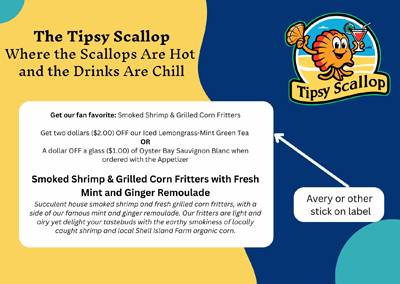
Larger Version at the Bottom
Times are tough, that’s nothing new for the restaurant business. I hear that quite a bit from business owners. I don’t want to discount; I don’t want to give away incentives. Margins are thin….etc.
For some businesses I would agree, if it’s what I call a “one and done”. An example might be a hardware store gives away a coupon. The recipient of the coupon waits until they need something to go to the hardware store, they may buy a few things or maybe only one thing that they use the coupon on, and “maybe” have an impulse buy. The hardware store isn’t really getting “more” out of them, other than the customer went to their hardware store, instead of the competitors and they had to lose a little of their profit margin to get them in the door.
Trying to upsell in a hardware store is doable, of course, but all I can think of is a hardware store employee, “Sir, I know you are buying this cordless drill only so you can fix your deck railing, but have you considered this beautiful set of 150 drill bits and perhaps an extra battery as well?”
Restaurants and most other eateries can use discounts and incentives to leverage MORE sales.
If you offer someone a free or deeply discounted appetizer or dessert for example, statistically most diners don’t like to dine alone, there are exceptions of course, but even for single diners, most people won’t go to a place “just” for an appetizer or “just” for the dessert.
If a couple comes in and takes advantage of the free appetizer, it’s not a lot of food (for them) even if they split it, and you still have them in the door to order at least a couple of entrees, possibly another appetizer, maybe some desserts and drinks. Once you have gotten them in the door, that’s also the time to have your staff and management trained to step in and upsell for some additional revenue.
Example: Succulent Smoked Shrimp & Grilled Corn Fritters with Spicy Remoulade.
The manager who is assisting with waiting tables, “Oh, you are ordering the shrimp and corn fritters, I LOVE those, I get those with my girlfriend when we come in on my day off. She swears the Kung Fu Girl Riesling is the BEST with it. I was skeptical because I’m not really a sweeter white fan but the remoulade is a little zippy and it helps balance the spice. She orders it every time we come in and now I’m a big fan!”
Double whammy here for marketing. Yes this example is a little over the top and a little wordy if vocalized, but an example of the upsell, in that the manager says A. he loves the food (he’s a fan) and B. he loves the place so much he will come back on his day off (employee loyalty).
Currently, Kung Fu Girl Riesling runs about $12 retail and less wholesale. Even based on the retail price, if you serve one 5 oz. glass of wine at $5.00 (cheap right?) and the wine is $2.40 your cost per glass, plus tack on a percentage for labor and overhead, you are still making at least a 50% profit margin. And that’s based again on retail pricing.
Even if you upped this to a 6 oz of wine, with wholesale costs, you are still making a hefty profit on this. That’s if you sell it by the glass which is the way to really make money on wine. I worked with an extremely good waiter named Karl many years ago who would use this type of upsell to increase the check average (and his tips). Personal buy-in plus personal endorsement equals sales.
This has always been my personal pet peeve with restaurants, and it’s also a pet peeve of many diners, who refuse to pay for a bottle of wine or by the glass that’s more than double retail prices, and up to four times retail in some places.
Give generous pours at affordable prices and people will order more. Having a great (but inexpensive and unknown) house wine is another way to increase profits, years ago when I was the Chef at a resort in Vermont, I did the wine ordering too, because I liked to do pairings and our front of house manager didn’t know much about wine. The “house” cabernet which was from a small vineyard on the Western Cape of South Africa cost me wholesale $3.50 a bottle. There was no brand name recognition for the wine, so no preconceived thoughts about price, but I had a nice writeup about it on the wine menu so people could get some insight into what kind of wine it was and what it paired well with. We got four pours from the bottle at $4.50 a glass. One dollar profit on one glass ordered (and paid for itself) and 3 additional glasses pure profit minus a small percentage for labor and overhead tacked on, still a hefty money maker.
If you want to make money on full bottles, drop the price to something realistic. Believe me, you will sell a LOT more wine, having done this for years in restaurants. Higher price points mean lower margins when it boils down to it. If you sell 3 bottles a month marked up triple your costs, you will sell less wine.
One of the methods I have used prior is to add on approximately 6 dollars to the average retail price, especially on the name brand recognized affordable wines, to keep the menu price point under $20. You are still making a profit on the $6, including the wholesale discounted price and the labor is the bartender taking 1 minute to open the cork and pour, and a small percentage for general overhead.
You can also add a few dollar corkage fee if you want to bring the “illusion” of costs down even more. $12 of drinkable but inexpensive wine (retail), it’s $16 for the bottle on your menu, plus a $2 corkage fee.
If you train your staff on wine and other beverage pairings and make them able to give suggestions, it not only increases your margins but increases staff knowledge. Pairing wine and beer on the menu itself is also a proven way to increase revenue.
If you or your staff is not well up on wine knowledge, at the moment, ChatGPT can come up with a great list of wines and beers to pair with your menu. I would spot check all of those as in testing as it came up with a couple of “fictional” wines when doing a bunch of testing, but knowing quite a bit about wine and food pairings myself, I’d say it does a more than better-than-average job. Put your menu into ChatGPT or other AI of choice and some specifics, Pair with wines under X dollars and the menu item and any other parameters you want to put in, i.e. Spanish wines only.
Having pairing suggestions on your menu, both alcoholic and non-alcoholic, makes it easy for people to decide and also for those that are afraid or just don’t feel comfortable asking for recommendations.
Tying these into a discount or promotion is carrying it one step further.
Get our fan favorite: Smoked Shrimp & Grilled Corn Fritters and get two dollars off our Iced Lemongrass-Mint Green Tea. Tea is a high profit margin item that costs less than $.50 even with some extra ingredients, selling it at $4.00, even with a dollar off is still a very good “extra” profit item. Most other beverage items, even with a discount, are still money makers.
A few examples, and giving some examples of different ways to describe the menu item as well as the beverage descriptions.
Vegetarian Small Plates + Pairings
Crispy Oven Roasted Artichoke Hearts with Zesty Lime and Rosemary Vegetarian Aioli
For one person: $7.50 For two: $14.50
Pairing Suggestions:
White: Oyster Bay Sauvignon Blanc (NZ)
Aromatic tropical fruits and bright citrus notes, with a refreshingly zesty finish. Recently awarded 90 points by James Suckling.
6 oz. Glass: $5.50 Bottle: $16.50 (Retail average is $10, wholesale would be less).
Red: Georges Duboeuf Beaujolais-Villages
Light-bodied, bright cherry and raspberry fruit, hints of violet and earth. Crisp acidity and low tannins make it food-friendly.
6 oz. Glass: $6.50 Bottle: $19.50
Beer: Bell’s Light Hearted Ale
Light Hearted is aromatic, balanced, and incredibly easy-drinking. This Lo-Cal IPA has only 110 calories, yet all the Heart. Centennial and Galaxy hops result in citrus and pine aromas, while a variety of specialty malts help give Light Hearted its body and flavor.
$4.50
Traditional Cocktails
Gin Gimlet with a Rosemary Twist
Lemon-Basil Vodka Fizz
Non-Alcoholic
House Made Cucumber-Lime Sparkling Water with a Rosemary Sprig
House Made & Herb Shrub
Iced Green Tea with Lemon
Grilled Aji Amarillo Pepper** and Sweet Basil Marinated Halloumi Skewers with Grilled Figs and a Drizzle of Honey Balsamic. **Aji Amarillo Peppers are a spicy South American chili pepper with vibrant orange-yellow skin and fruity flavor. On a scale of spicy peppers from 1-4, Amarillos are about a 3, the Halloumi cheese balances the spiciness of the peppers and brings it down a notch.
Pairing Suggestions:
White: Santo Wines Assyrtiko
Assyrtiko, a Greek white wine, is known for its high acidity and mineral notes. These characteristics complement the salty halloumi and cut through the richness, while the wine’s citrus undertones harmonize with the sweet basil and balance the Aji Amarillo’s heat.
Red: Domaine du Pélican Arbois Poulsard
A light-bodied, naturally bright red from the Jura region of France. It shows delicate red berries, subtle earthiness, and a whisper of spice. Tannins are soft, and the wine finishes with refreshing acidity and a touch of minerality. Earthy undertones match the grilled figs and basil, while the light body complements the dish’s delicate balance of sweet, smoky, and herbal notes.
Beer: Weihenstephaner Hefeweissbier
This German wheat beer offers a smooth, creamy texture with notes of banana and clove. Its subtle sweetness and effervescence provide a refreshing counterpoint to the spicy Aji Amarillo and the savory halloumi, while the beer’s body stands up to the dish’s bold flavors.
Traditional Cocktails
Whiskey Sour
Classic Mojito
Not So Traditional Cocktails
Basil Whiskey Smash
Housemade Honey Balsamic Old Fashioned (balsamic reduction in place of simple syrup with a dash of honey and orange bitter)
Non-Alcoholic
Iced Hibiscus Tea with Orange Peel
Pomegranate Spritzer
Housemade Ginger-Turmeric Tonic (unsweetened)
Smoked Shrimp & Grilled Corn Fritters with Fresh Mint and Ginger Remoulade
Succulent house smoked shrimp and fresh grilled corn fritters, with a side of our famous mint and ginger remoulade. Our fritters are light and airy yet delight your tastebuds with the earthy smokiness of locally caught shrimp and local Shell Island Farm organic corn.
Pairing Suggestions:
White: Dr. Loosen Blue Slate Riesling Kabinett
This Riesling offers bright acidity and subtle sweetness, which balance the smokiness of the shrimp and the heat from the ginger. Its citrus and mineral notes complement the corn fritters and mint in the remoulade.
Red: Cleto Chiarli Lambrusco di Sorbara
Light, fizzy, and dry with red berry flavors (think raspberry and cherry), floral notes, and mouth-cleansing acidity. The slight fizziness of this red helps balance the richness of the fritters and mild acidity complements the ginger.
Beer: Saison Dupont
Saison Dupont is a Belgian farmhouse ale known for its effervescence and peppery, citrusy flavors. These flavors cut through the richness of the fritters and enhance the herbal notes of the mint-ginger remoulade.
Traditional Cocktails
Moscow Mule
Daiquiri (Traditional, not frozen)
Not So Traditional Cocktails
Ginger-Lemongrass Rickey
Charred Corn Old Fashioned
Non-Alcoholic
Iced Lemongrass-Mint Green Tea
Shrub Spritz (Ginger-Mint Shrub + Sparkling Wine or Soda)
Savory Tomato-Ginger Tonic
Crispy Polenta with Roasted Beet Bites with Smoked Tomato and Lavender Jam
Pairing Suggestions:
Red: Gnarly Head Pinot Noir
This California Pinot Noir is bold for the varietal, with ripe cherry and raspberry flavors at the forefront. Underneath is a thread of vanilla and toasted oak. Medium-bodied with a silky texture and soft tannins, it finishes with a touch of sweet spice. The wine’s ripe red fruit plays well with the smoked tomato-lavender jam, echoing the jam’s sweetness and contrasting the smoke with bright acidity.
White: Geyser Peak Sauvignon Blanc
A vibrant, zesty white with high-toned aromatics: lime, gooseberry, and freshly cut grass. It’s lean and dry with a bright acidity and a mineral edge, finishing with crisp green apple and citrus zest notes. The wine’s lime and green apple notes offer a clean, tart contrast to the sweetness of the roasted beets and the smoky tomato-lavender jam,
Goose Island Sofie (Saison/Farmhouse Ale)
A Belgian-style saison aged in wine barrels with orange peel. It pours golden with a creamy head. Aromas include white pepper, orange zest, and a hint of vanilla. The taste is tart, citrusy, and subtly spicy, with a champagne-like effervescence and a dry finish. Sofie’s flavors of orange peel and white pepper brighten the earthy sweetness of the roasted beets and contrast nicely with the smoked tomato jam.
Traditional Cocktails
Negroni
Americano
Not So Traditional Cocktails
Lavender-Basil Gimlet
Smoked Tomato Bloody Mary (w/ Lavender Salt Rim)
Non-Alcoholic
Lavender-Lime Soda
Chilled Spiced Carrot Juice
Sparkling Apple-Celery Tonic
A marketing piece like this can be used for mailers, in house promotions (put it on a tent card or menu holder) encourages guests to buy prior to ordering while dining, and as social media posts. “Mention this ad and get…..”

This is a sample chapter for my upcoming book on Guerrilla Marketing, releasing mid-summer 2025. The book will be focusing on over 100 Guerrilla Marketing ideas with examples, as well as a few chapters like the above. I have a favor to ask, if you catch a typo please send me a wave and let me know, snarky comments are appreciated if they are well meant and funny, even running text through two very good grammar editors doesn’t always catch things and my book editor has not yet had a crack at this. 🙂