by Heather T. | Jul 14, 2026 | Books, Business, Food, Observations, restaurants
 I wrote this chapter for my book Outsmart, Outserve and Order Up!: Guerrilla Marketing Tactics for Culinary Operators last year with the intention of simply getting the ideas out of my head and down on paper and haven’t spent the time promoting it, but given the current economic pressures facing today’s restaurants, I thought it might be helpful to share it with restaurant operators looking for ideas on how to incentivize and retain staff and managers.
General Manager, Front of the House Manager, Bar Manager, and Back of the House Manager Incentive Ideas:
What do you do as an owner when you find a manager who’s on the ball? You’ve got a keeper. So how do you keep the keeper? Give them a reason to think like an owner, not a manager, who is just clocking in hours.
Too many restaurants measure their managers on food cost, bar sales and keeping labor costs down. Those definitely matter, but you can cut costs and micromanage an establishment down to the last onion, but that doesn’t help increase business.
By giving your management a stake in the business that’s tied into your restaurant’s financial success you will help motivate and keep those keepers engaged.
Trusting managers to help increase sales and take a stake in the business also shows them you don’t just want someone to manage, you want someone to get involved. Financially rewarding them for increases in business as a result of new catering contracts, group reservations, events, and local business partnerships gives them a personal interest in making sure the business does well, because it puts more money in their pockets.
Having motivated managers and staff changes the entire culture of your restaurant: upsells become second nature, staff is more likely to offer better service, and the energy changes from just going from shift to shift and “showing up” to actively being involved.
If you are going to start an incentive program, here are a few tips:
Start small and test to see whether it’s enough of an incentive for management and staff to make that extra effort. Don’t over promise and not deliver. When onboarding staff, involve them and educate them on the incentives from day one.
Do some call outs when staff (not managers) hit their numbers and don’t single out employees who don’t make progress. Ask questions of the ones not making progress. Why? Is it not enough of an incentive? Is it too hard? Other? Many years ago I had an incentive program for my wait staff to upsell our wine list and I had one newer server that just wasn’t hitting the numbers that everyone else was. In sitting down with her and asking, she was a pretty shy person and just didn’t feel comfortable asking customers for the upsell and wasn’t confident in her wine knowledge. I paired her with a very experienced server who was very knowledgeable about wine and very patient and encouraging. Her confidence level increased within a few months, and she was hitting roughly the same numbers as other waitstaff.
There is an extra takeaway from this about the importance of staff training. You can’t ask a waitperson to upsell the steak au poivre if they don’t know what it tastes like. In restaurants where I was the chef, I made sure all the front of the house staff tasted all the dishes and all the daily specials so they knew what was in them. It gave them the opportunity to ask questions and then they knew what they tasted like. A fan of a certain pasta dish might sell more than a fan of the shrimp dish, but you also make more money on pasta. Educating staff about the wines and beers on your menu increases your sales as well as their tips.
You can also apply some of the following incentives to general staff.
Profit Sharing Bonus
Tie in quarterly bonuses to net profit increases. Include a baseline to ensure rewards only trigger when sales growth happens. Always define profit clearly gross vs. net.
Example: Fixed Percentage of Net Profit Over Base
Incentive: If quarterly net profit exceeds $50,000 (the base), manager earns 5% of the profit above that threshold.
Results:
Net profit = $65,000
Bonus = 5% of $15,000 = $750
Example: Tiered Profit Sharing Bonus
Incentive: 3% bonus if profit increases 5–9% over baseline
Incentive: 5% bonus if profit increases 10–14%
Incentive: 7% bonus if profit increases 15%+
Results:
Last year Q2 net profit = $40,000
This year Q2 = $46,000 (15% increase)
Bonus = 7% of $46,000 = $3,220
Example: Shared Team Pool Bonus
Incentive: 10% of any net profit increase is split 60/40 between the GM and assistant manager(s).
Results:
Net profit grew by $20,000
10% = $2,000 bonus pool
GM receives $1,200; AM(s) split $800
Example: Hybrid Base + Profit Kicker
Incentive: Guaranteed $1,000 quarterly bonus + 2% of any net profit over a set target.
Results:
Net profit = $70,000, baseline = $50,000
Bonus = $1,000 + (2% of $20,000) = $1,400
Sales Target Bonuses
Tiered bonuses for surpassing sales goals, weekly, monthly, or quarterly. Key is to make them achievable
Example: $500 for 5% sales increase, $1,000 for 10%.
Menu Item Upsell Incentives
Rewards based on the sales of featured or high-margin items.
Example: For the month of June, the restaurant features a high-margin appetizer—Truffle Parmesan Fries.
Goal: Sell at least 300 orders in June.
Incentive: If the manager’s team sells 300+, the manager earns a $300 bonus.
Additional (optional) Bonus: For every 50 orders beyond 300, the manager earns an extra $50.
Online Review Score Bonus
Base a portion of your manager’s bonus on maintaining or improving Google/Yelp/Tripadvisor reviews AND scores.
Example: The restaurant’s current Google rating is 4.2 stars with 300 reviews.
Base: Maintain or improve rating to 4.3 stars or higher by quarter’s end.
Volume Goal: Receive at least 40 new reviews in the quarter (to show active engagement).
Incentive: If both goals are met, the manager receives a $500 bonus.
Staff Retention Bonus
Rewards low turnover and/or high engagement.
Example: At the start of the quarter, the restaurant has 12 employees. The manager is eligible for a bonus if 10 or more of the original team are still employed at the end of the quarter.
Incentive: $100 bonus per retained staff member beyond the threshold of 10.
Bonus Cap: $400 maximum per quarter.
Equity or Phantom Equity (for long-term retention)
For key managers, offering a small equity stake or phantom shares tied to company valuation or eventual sale.
Example: A general manager is granted 0.5% phantom equity in the restaurant group, with a 3-year vesting schedule.
Terms: No actual ownership or voting rights. If the business is sold or hits a $5 million valuation, the phantom
shares pay out as if the manager owned 0.5%.
Incentive: Business sells after 4 years for $6 million. Manager receives 0.5% × $6M = $30,000 payout.
Operational Efficiency Bonus (for BOH but GM can be tied in if overseeing)
Reward cost-saving without quality loss, like lowering food waste or optimizing labor costs. Use benchmark comparisons (e.g., % food cost below target).
Example: The restaurant sets a quarterly food cost target of 30% of sales. If the kitchen maintains 28% or lower without guest complaints or quality issues:
Incentive: Kitchen manager earns $400
GM Incentive: If GM oversees BOH and labor costs also come in under 20%, they earn an additional $300
Health & Safety Compliance Bonus
Quarterly bonuses tied to clean inspection scores, safety checklists completed on time, or zero incident reports.
Example: The restaurant undergoes two unannounced health inspections per year.
Base: Score of 90 or above on each inspection.
Incentive: $250 bonus for a passing score over 90. $500 if the location scores 95 or higher
A clean review (no critical violations) across both inspections triggers an additional $250 annual bonus
Innovation Recognition (this is a good one for all employees)
Managers who introduce ideas that improve systems, training, scheduling, or guest experience yet does not have to be tied to immediate profit. Could be small cash rewards or public recognition.
BOH Example: A shift manager develops a color-coded prep station system that reduces kitchen confusion and improves order accuracy during rush hours.
Result: Fewer ticket errors and a noticeable drop in kitchen staff stress.
Incentive: The manager receives a $150 cash bonus and is recognized in the company newsletter as
“Innovator of the Month.”
FOH Example: A FOH manager creates a “Last Ten Feet” service protocol, training hosts and servers to give personalized send-offs at the door (e.g., using names from reservations, asking about the meal).
Result: Google reviews mentioning “warm goodbye” increase by 30% over the next two months.
Incentive: Manager receives a $200 bonus and a framed certificate labeled “Service Innovation Spotlight,” displayed in the entryway.
Community Engagement Bonus
Bonus if the manager successfully coordinates community events or local partnerships that drive traffic or visibility.
Example: manager investigates partnership with a local animal shelter to host a “Pints for Paws” event, where $1 from every beer sold supports pet adoptions. The event is promoted through the restaurant’s and the nonprofit organization’s social media and draws over 200 attendees with a 25% increase in Sunday sales.
Incentive: Manager earns a $300 bonus for executing a successful event that increased traffic and local visibility.
If the event becomes a recurring partnership, the manager qualifies for an annual $500 community builder bonus.
Milestone Celebrations (this is a good one for all employees)
Rewards long-term retention and loyalty with anniversary bonuses at 1, 3, 5, 10 years.
Examples:
1 Year: $250 bonus + handwritten thank-you note from ownership
3 Years: $500 bonus + one extra paid day off
5 Years: $1,000 bonus + engraved plaque on the “Wall of Commitment”**
10 Years: $2,500 bonus + weekend getaway package for two**
**Recognized at a staff thank you luncheon and spotlighted in some social media posts.
Education Stipends
Covers part of the cost of hospitality certifications, management training, or culinary or F&B coursework contingent on performance benchmarks.
Example: A floor manager expresses interest in completing a Hospitality Leadership Certificate offered online for $800 from Cornell.
Eligibility Criteria: 6+ months in the role, past two performance reviews rated “Exceeds Expectations”. Employee commits to staying with the company for 12 more months.
Incentive: Restaurant covers 75% of the course cost ($600) upon enrollment, with the final 25% reimbursed after successful completion.
Training Completion Rewards
Bonuses for completing leadership or skill-based training modules
Example: $150 per training completed, like ServSafe, TIPs training, or other hospitality and F&B training that can enhance the operation. Additional points ($ or other incentive) for high scores.
Customer Loyalty Program Growth
Bonus for increasing sign-ups or usage of customer loyalty programs
Example: $200 for 100 new loyalty sign-ups
Holiday/Event Performance
Bonus/extra pay for exceeding targets during peak seasons or holidays
Seasonal or Event-Based
Example: $250-$750 depending on event results, size and $$
Example: New Year’s sales of Champagne splits are targeted at selling 23 bottles for a 120 seat restaurant, hit the target, receive a bonus, exceed the target by X number of bottles, receive an extra bonus.
© Heather Turner 2025 Outserve, Outsmart and Order Up! Guerrilla Marketing Tactics for Culinary Operators. ISBN 979-8989925025
by Heather T. | Jan 22, 2026 | Books
 Just listed on Amazon in Paperback, Kindle and Kindle Unlimited
Paperback | Kindle
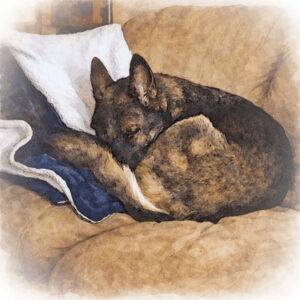
Ily the Drama Queen Goes to the Vet
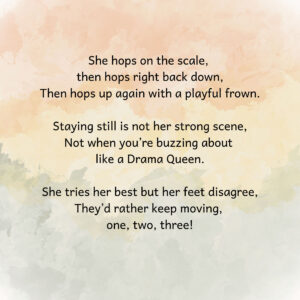
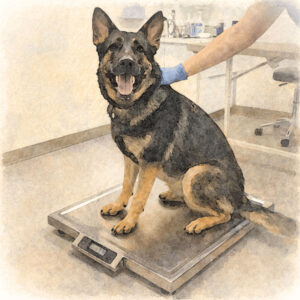
Meet ILY, the Drama Queen with the biggest heart and the loudest voice. In this heartwarming and humorous children’s book, ILY takes us on a journey to the vet where her emotions run wild. At home, she’s a calm and cuddly German Shepherd, but at the vet, she becomes a full-scale Drama Queen. From happy wiggles to operatic protests, ILY feels everything out loud and that’s okay. But with the help of patient veterinary staff and familiar routines, ILY learns that even scary moments can pass and calm can return. Told in playful rhyme and filled with expressive moments, this story gently shows young readers that it’s okay to have big feelings and that love and compassion can conquer any fear. Recommended for children ages 3-7, all dog lovers, and especially German Shepherd owners who can relate to their furkids being Drama Queens.
50% of all proceeds from sales of this book will be donated to Service Dogs NH. During National Service Dog Month and other associated days, we will be donating 100% of all sales.
A little backstory about this cause:
I first became familiar with Service Dogs NH several years ago, as I was called on to assist in a mentoring session with the founder, Brendan Madden. I have two words for Brendan: Amazing and Incredibly Inspirational (okay, so it’s more than two, but that doesn’t even describe the tip of the iceberg). I can’t express how much I admire his enthusiasm and for starting a nonprofit like this.
Why am I donating proceeds to this cause? Because Ily, (who is the loudmouthed star of this project) was originally destined to be a service dog. Because I very much admire Brendan and his goals for his nonprofit, and who his organization helps (both people and pups) and because this book was done for fun and not with the goal to conquer the children’s book market. As If 🙂
A little about Service Dogs NH:
The mission of Service Dogs NH is to provide financial assistance to service dog owners across the state, helping qualified individuals with the cost of veterinary care and medicines. They also focus on advocating and education, answering the questions and concerns of service dog owners while educating businesses, landlords, and the general public on the importance of service dogs and make them more aware of the laws and etiquette about service dogs. For more about Service Dogs NH, visit https://servicedogsnh.org/about/
A little more backstory about this book:
I never thought I would write a children’s book. I’ve written three business books so far and am currently working on another one, and, shamefully, I haven’t really advertised them and as I write this I just remembered I hadn’t even added the third book onto the sidebar on my website (what do they say about the cobbler’s children?). This book came about entirely by accident.
We have a couple of German Shepherds who are former guide dog trainees (we are former puppy raisers for a guide dog program in CT) that were released from their training program for medical reasons, and we ended up adopting them after they dropped out of training. Ily, on whom this book is based, is one of those pups.
About a month and a half ago, my husband and I were joking around about how much of a drama queen one of our dogs is when she goes to the local vet. A little backstory: she and my oldest granddaughter are best buddies. We thought it would make a funny story, and a fun family created gift for her to remember Ily by. The local veterinarian and vet techs all know her as “the drama queen,” and the whole thing originally started as a small project where we were maybe just going to order a Zazzle book for her when it was done. When we started showing it to friends and family, they said, “Why not put it online?” So here we are.
The images in the book come from photos my husband and I have taken not just over the past year, but over several years. Because of that, you’ll see some variation, images from when she was much younger and didn’t yet have gray on her muzzle, and more recent ones where she is, unfortunately, starting to look like the older dog she is today. We love them while they are with us, which is never long enough.
I also have to add a big thank you to our wonderful vet, Diane, who is also in this book (used with permission), with an image of her sitting on a bench and being enthusiastically licked by our furkid. One of my favorite photos as well! We’re very grateful to her for many years of terrific vet care over several generations of GSDs. Her vet’s office is also the basis of many of the original photos used.
What I found interesting about this project was that writing the rhymes for the book didn’t take long, and we were happy with the minor revisions. The image editing, however, took more than a month. It wasn’t just a matter of dropping a photo into Photoshop and applying a watercolor effect, each image required additional editing, and in some cases quite a lot of pixel-by-pixel work including a couple of other graphics editors, before I was satisfied. And I had to stop messing with some of the illustrations or I’d still be at it.
This book as mentioned prior, was not originally intended for sale, but because I put it on Amazon, I wanted some proceeds from this to go towards a good cause and because our pups were originally on the career track to become service dogs; I thought it would be a perfect way to give back.
I learned a lot from this project, particularly that formatting a children’s book with images differs greatly from formatting a text-based book with a few illustrations. Lessons learned, and if I ever decide to do another one, I’ll probably do a better job next time and will also do colored-pencil illustrations and scan them in instead of creating digital images. But who knows…………
We hope you enjoy.
by Heather T. | Aug 26, 2025 | Books, Business, Guerrilla Marketing, Marketing, Operations, restaurants
 Outsmart, Outserve and Order Up!: Guerrilla Marketing Tactics for Culinary Operators was just published, and I thought I’d share a sample chapter from the book. 50% of net profits from the sale of each book will be donated to our local New Hampshire food pantries.
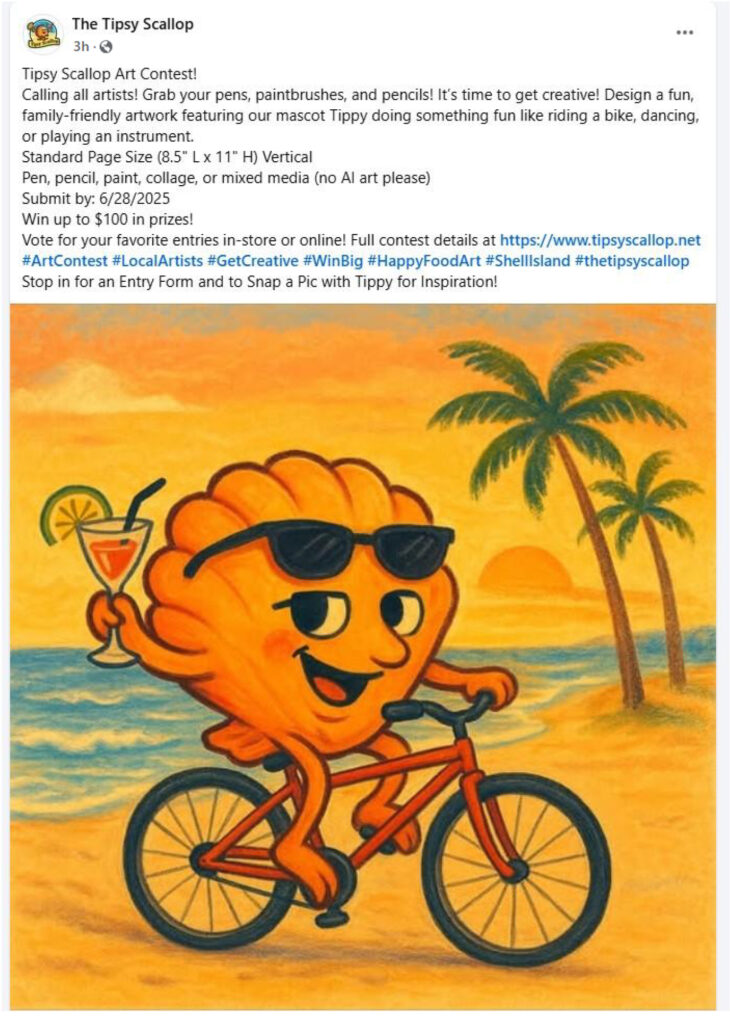
Brand Your Art: A Customer Creativity Contest
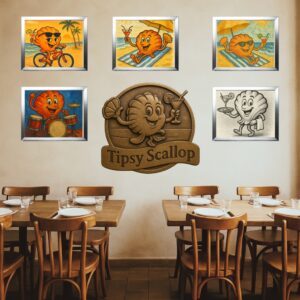
Encourage your customers to tap into their artistic side by creating a standard page-sized artwork featuring your business logo, mascot or image or character within your logo. This logo, mascot or food character can be riding a bicycle, playing a musical instrument, dancing, or engaging in any other fun, whimsical activities.
Sample Submission Guidelines: (examples)
-
Artwork must be standard page size horizontal (8.5″L x 11″ W) or size of your choosing.
-
Mediums allowed: pen, pencil, paint, collage, or mixed media. (as long as it can fit within a frame)
-
The business logo or mascot must be incorporated in the artwork in some form.
-
Bonus: if you have brand colors you use for your business, ask participants to use those colors. (And give them the digital and print color codes RGB, CMYK or Pantone.)
-
The logo, mascot or food character must be performing a fun activity. (keep it family friendly please)
-
Limit of one submission per entrant.
-
Submission deadline: [Insert Date]
You will need to have an enlarged version of the logo or mascot, (this could be regular page size) posted somewhere and encourage people to snap a picture of it so they can recreate it for artwork. Also think about how you want entries submitted, Via email? Dropped off? Other?
Voting Process: (examples)
-
Display entries in the restaurant on a designated wall and on social media. Very inexpensive frames can be obtained from the Dollar Tree or other discount stores, or online retailers, to keep costs down.
-
Customers can vote in-store by placing a ticket in a designated voting box or online via social media reactions.
-
Voting period: [Insert Date Range]
-
Top three artworks with the most votes win.
Prizes: (examples)
1st Place: $100 gift card (or other prize/incentive)
2nd Place: $50 gift card (or other prize/incentive)
3rd Place: $25 gift card (or other prize/incentive)
You could do this on a monthly or quarterly basis and just have “one” theme, ie mascot riding a bicycle, next month is mascot surfing, etc. and just keep the top three from each month up permanently and as additional ones are done, and more wall space is needed just keep the 1st place winners up long term.
Promotion:
-
Use posters, table tents, and social media posts to promote the contest.
-
Feature the winning artworks prominently in the restaurant and online.
-
Consider making limited-edition merchandise (like t-shirts or tote bags) featuring the winning designs. You need a signed agreement with the original artist.
Sample Promotional Flyer: Food Adventure Art Contest
Get Creative & Win Big!
Show off your artistic talent in our Food Adventure Art Contest! We’re looking for fun, family-friendly artwork that features our “logo, mascot, or a food character” engaging in a fun activity like riding a bike, playing an instrument, or dancing!
Submission Guidelines: (sample)
-
Example: Artwork must be 8.5″ L x 11″ W horizontal (standard page size).
-
Mediums allowed: pen, pencil, paint, collage, or mixed media (as long as it can fit within a frame). (No AI art please, we can tell).
-
Our “logo, mascot, or a food character” must be incorporated in some form.
-
Keep it family-friendly, please.
-
Limit one entry per participant.
-
Submission Deadline: [Insert Date]
Voting Process: (sample)
-
Entries will be displayed on a designated wall in the restaurant and on our social media pages (if applicable).
-
Vote in-store by dropping a ticket in the voting box or online by liking your favorite artworks!
-
Voting Period: [Insert Date Range]
Prizes: (sample)
1st Place: $100 gift card (or other prize/incentive)
2nd Place: $50 gift card (or other prize/incentive)
3rd Place: $25 gift card (or other prize/incentive)
Get Involved: (sample)
-
Monthly or quarterly contests, each with a new theme (e.g., mascot surfing, mascot dancing, mascot eating).
-
Winning artworks stay up all year, with 1st place pieces displayed long-term!
-
Consider submitting every month for a chance to have your art featured on limited-edition merch!
-
Ready, Set, Draw! Submit your artwork by [Insert Date] for your chance to win and be featured!
Prep List:
-
Choose the art theme (e.g., mascot/logo biking, dancing, cooking, etc.).
-
Finalize submission deadline and voting period dates.
-
Determine allowed artwork size (e.g., 8.5” x 11”, portrait or landscape orientation).
-
Set guidelines for acceptable mediums (pen, pencil, paint, collage, etc.). Do you want to allow AI?
-
Require inclusion of logo, mascot, or food character in the artwork.
-
Decide on the submission method (in-person drop-off and/or email submission).
-
Post a large version of your logo/mascot for participants to reference or photograph.
-
Create a digital flyer with all contest details.
-
Write a short set of rules (“1 entry per person” and “family-friendly content only” etc.).
-
Purchase low-cost frames for displaying art (Dollar Tree or similar).
-
Designate a voting wall area inside the restaurant.
-
Create a labeled voting box with entry tickets.
-
Plan for social media voting (use “like” or “reaction” counts).
-
Choose and announce the number of winners (e.g., top 3 by votes).
-
Determine and budget for prizes, Examples:
-
1st Place – $100 gift card (or custom prize)
-
2nd Place – $50 gift card
-
3rd Place – $25 gift card
-
Prepare any physical prizes or certificates in advance.
-
Design and print posters for in-store display.
-
Create table tents or inserts for menus.
-
Promote via:
-
Schedule reminder posts leading up to submission deadline
-
Encourage staff to mention the contest to customers.
-
Plan for monthly or quarterly contests with changing themes.
-
Keep all 1st place winners displayed long-term.
-
Feature winners in a social media spotlight post.
-
Explore turning winning entries into limited-edition merchandise (T-shirts, totes, etc.).
-
Announce winners online and in-store.
-
Reward participants and thank them publicly.
-
Archive submissions digitally (consider a social media highlight or gallery on your website).
-
Refresh the contest theme and restart the cycle if recurring.
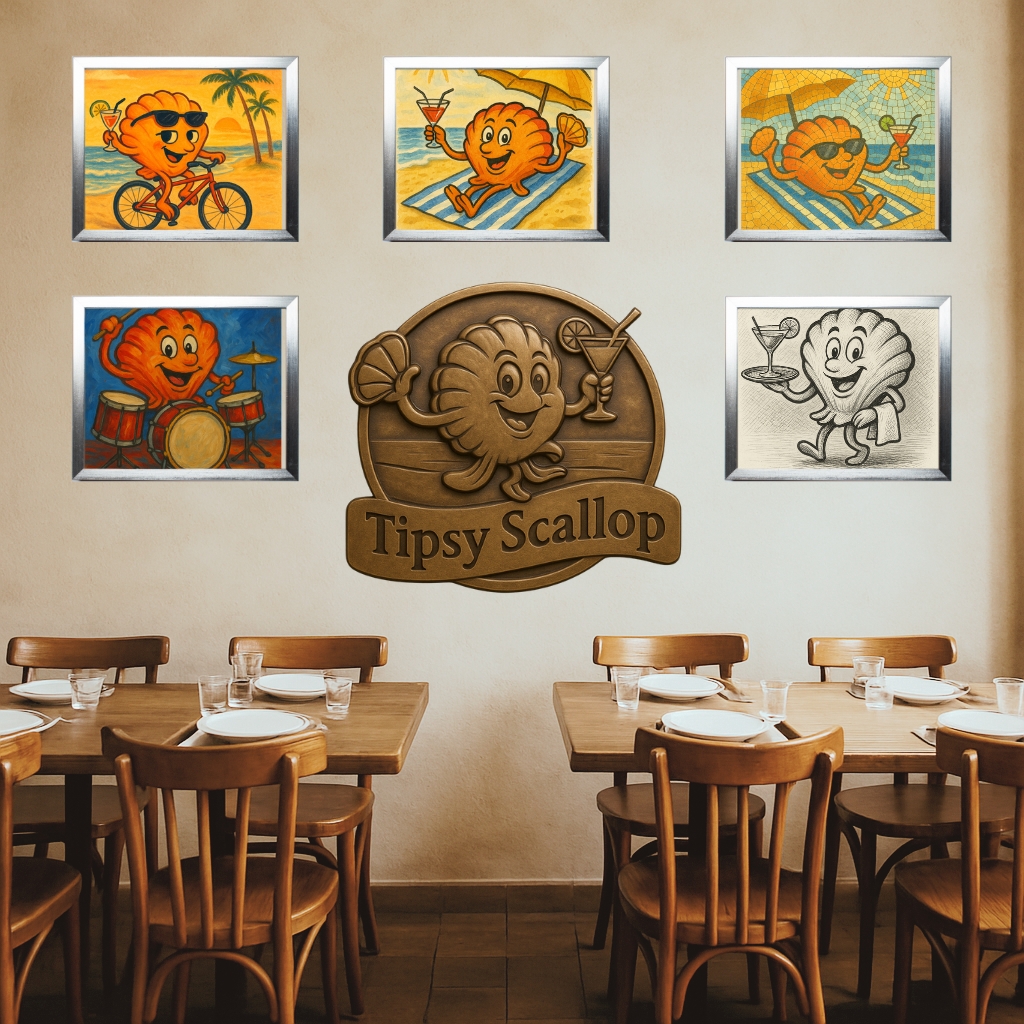
*ChatGPT was used to create the restaurant setting above and the images based on the restaurant logo. Canva was used to put everything together.
by Heather T. | May 15, 2025 | Books, Business, Marketing, Observations, Operations, restaurants
Larger Version at the Bottom
Times are tough, that’s nothing new for the restaurant business. I hear that quite a bit from business owners. I don’t want to discount; I don’t want to give away incentives. Margins are thin….etc.
For some businesses I would agree, if it’s what I call a “one and done”. An example might be a hardware store gives away a coupon. The recipient of the coupon waits until they need something to go to the hardware store, they may buy a few things or maybe only one thing that they use the coupon on, and “maybe” have an impulse buy. The hardware store isn’t really getting “more” out of them, other than the customer went to their hardware store, instead of the competitors and they had to lose a little of their profit margin to get them in the door.
Trying to upsell in a hardware store is doable, of course, but all I can think of is a hardware store employee, “Sir, I know you are buying this cordless drill only so you can fix your deck railing, but have you considered this beautiful set of 150 drill bits and perhaps an extra battery as well?”
Restaurants and most other eateries can use discounts and incentives to leverage MORE sales.
If you offer someone a free or deeply discounted appetizer or dessert for example, statistically most diners don’t like to dine alone, there are exceptions of course, but even for single diners, most people won’t go to a place “just” for an appetizer or “just” for the dessert.
If a couple comes in and takes advantage of the free appetizer, it’s not a lot of food (for them) even if they split it, and you still have them in the door to order at least a couple of entrees, possibly another appetizer, maybe some desserts and drinks. Once you have gotten them in the door, that’s also the time to have your staff and management trained to step in and upsell for some additional revenue.
Example: Succulent Smoked Shrimp & Grilled Corn Fritters with Spicy Remoulade.
The manager who is assisting with waiting tables, “Oh, you are ordering the shrimp and corn fritters, I LOVE those, I get those with my girlfriend when we come in on my day off. She swears the Kung Fu Girl Riesling is the BEST with it. I was skeptical because I’m not really a sweeter white fan but the remoulade is a little zippy and it helps balance the spice. She orders it every time we come in and now I’m a big fan!”
Double whammy here for marketing. Yes this example is a little over the top and a little wordy if vocalized, but an example of the upsell, in that the manager says A. he loves the food (he’s a fan) and B. he loves the place so much he will come back on his day off (employee loyalty).
Currently, Kung Fu Girl Riesling runs about $12 retail and less wholesale. Even based on the retail price, if you serve one 5 oz. glass of wine at $5.00 (cheap right?) and the wine is $2.40 your cost per glass, plus tack on a percentage for labor and overhead, you are still making at least a 50% profit margin. And that’s based again on retail pricing.
Even if you upped this to a 6 oz of wine, with wholesale costs, you are still making a hefty profit on this. That’s if you sell it by the glass which is the way to really make money on wine. I worked with an extremely good waiter named Karl many years ago who would use this type of upsell to increase the check average (and his tips). Personal buy-in plus personal endorsement equals sales.
This has always been my personal pet peeve with restaurants, and it’s also a pet peeve of many diners, who refuse to pay for a bottle of wine or by the glass that’s more than double retail prices, and up to four times retail in some places.
Give generous pours at affordable prices and people will order more. Having a great (but inexpensive and unknown) house wine is another way to increase profits, years ago when I was the Chef at a resort in Vermont, I did the wine ordering too, because I liked to do pairings and our front of house manager didn’t know much about wine. The “house” cabernet which was from a small vineyard on the Western Cape of South Africa cost me wholesale $3.50 a bottle. There was no brand name recognition for the wine, so no preconceived thoughts about price, but I had a nice writeup about it on the wine menu so people could get some insight into what kind of wine it was and what it paired well with. We got four pours from the bottle at $4.50 a glass. One dollar profit on one glass ordered (and paid for itself) and 3 additional glasses pure profit minus a small percentage for labor and overhead tacked on, still a hefty money maker.
If you want to make money on full bottles, drop the price to something realistic. Believe me, you will sell a LOT more wine, having done this for years in restaurants. Higher price points mean lower margins when it boils down to it. If you sell 3 bottles a month marked up triple your costs, you will sell less wine.
One of the methods I have used prior is to add on approximately 6 dollars to the average retail price, especially on the name brand recognized affordable wines, to keep the menu price point under $20. You are still making a profit on the $6, including the wholesale discounted price and the labor is the bartender taking 1 minute to open the cork and pour, and a small percentage for general overhead.
You can also add a few dollar corkage fee if you want to bring the “illusion” of costs down even more. $12 of drinkable but inexpensive wine (retail), it’s $16 for the bottle on your menu, plus a $2 corkage fee.
If you train your staff on wine and other beverage pairings and make them able to give suggestions, it not only increases your margins but increases staff knowledge. Pairing wine and beer on the menu itself is also a proven way to increase revenue.
If you or your staff is not well up on wine knowledge, at the moment, ChatGPT can come up with a great list of wines and beers to pair with your menu. I would spot check all of those as in testing as it came up with a couple of “fictional” wines when doing a bunch of testing, but knowing quite a bit about wine and food pairings myself, I’d say it does a more than better-than-average job. Put your menu into ChatGPT or other AI of choice and some specifics, Pair with wines under X dollars and the menu item and any other parameters you want to put in, i.e. Spanish wines only.
Having pairing suggestions on your menu, both alcoholic and non-alcoholic, makes it easy for people to decide and also for those that are afraid or just don’t feel comfortable asking for recommendations.
Tying these into a discount or promotion is carrying it one step further.
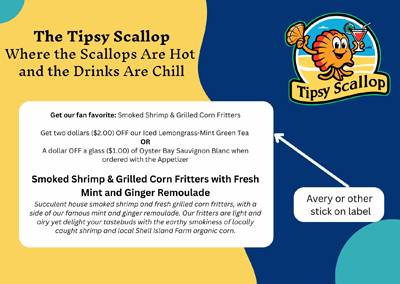
Get our fan favorite: Smoked Shrimp & Grilled Corn Fritters and get two dollars off our Iced Lemongrass-Mint Green Tea. Tea is a high profit margin item that costs less than $.50 even with some extra ingredients, selling it at $4.00, even with a dollar off is still a very good “extra” profit item. Most other beverage items, even with a discount, are still money makers.
A few examples, and giving some examples of different ways to describe the menu item as well as the beverage descriptions.
Vegetarian Small Plates + Pairings
Crispy Oven Roasted Artichoke Hearts with Zesty Lime and Rosemary Vegetarian Aioli
For one person: $7.50 For two: $14.50
Pairing Suggestions:
White: Oyster Bay Sauvignon Blanc (NZ)
Aromatic tropical fruits and bright citrus notes, with a refreshingly zesty finish. Recently awarded 90 points by James Suckling.
6 oz. Glass: $5.50 Bottle: $16.50 (Retail average is $10, wholesale would be less).
Red: Georges Duboeuf Beaujolais-Villages
Light-bodied, bright cherry and raspberry fruit, hints of violet and earth. Crisp acidity and low tannins make it food-friendly.
6 oz. Glass: $6.50 Bottle: $19.50
Beer: Bell’s Light Hearted Ale
Light Hearted is aromatic, balanced, and incredibly easy-drinking. This Lo-Cal IPA has only 110 calories, yet all the Heart. Centennial and Galaxy hops result in citrus and pine aromas, while a variety of specialty malts help give Light Hearted its body and flavor.
$4.50
Traditional Cocktails
Gin Gimlet with a Rosemary Twist
Lemon-Basil Vodka Fizz
Non-Alcoholic
House Made Cucumber-Lime Sparkling Water with a Rosemary Sprig
House Made & Herb Shrub
Iced Green Tea with Lemon
Grilled Aji Amarillo Pepper** and Sweet Basil Marinated Halloumi Skewers with Grilled Figs and a Drizzle of Honey Balsamic. **Aji Amarillo Peppers are a spicy South American chili pepper with vibrant orange-yellow skin and fruity flavor. On a scale of spicy peppers from 1-4, Amarillos are about a 3, the Halloumi cheese balances the spiciness of the peppers and brings it down a notch.
Pairing Suggestions:
White: Santo Wines Assyrtiko
Assyrtiko, a Greek white wine, is known for its high acidity and mineral notes. These characteristics complement the salty halloumi and cut through the richness, while the wine’s citrus undertones harmonize with the sweet basil and balance the Aji Amarillo’s heat.
Red: Domaine du Pélican Arbois Poulsard
A light-bodied, naturally bright red from the Jura region of France. It shows delicate red berries, subtle earthiness, and a whisper of spice. Tannins are soft, and the wine finishes with refreshing acidity and a touch of minerality. Earthy undertones match the grilled figs and basil, while the light body complements the dish’s delicate balance of sweet, smoky, and herbal notes.
Beer: Weihenstephaner Hefeweissbier
This German wheat beer offers a smooth, creamy texture with notes of banana and clove. Its subtle sweetness and effervescence provide a refreshing counterpoint to the spicy Aji Amarillo and the savory halloumi, while the beer’s body stands up to the dish’s bold flavors.
Traditional Cocktails
Whiskey Sour
Classic Mojito
Not So Traditional Cocktails
Basil Whiskey Smash
Housemade Honey Balsamic Old Fashioned (balsamic reduction in place of simple syrup with a dash of honey and orange bitter)
Non-Alcoholic
Iced Hibiscus Tea with Orange Peel
Pomegranate Spritzer
Housemade Ginger-Turmeric Tonic (unsweetened)
Smoked Shrimp & Grilled Corn Fritters with Fresh Mint and Ginger Remoulade
Succulent house smoked shrimp and fresh grilled corn fritters, with a side of our famous mint and ginger remoulade. Our fritters are light and airy yet delight your tastebuds with the earthy smokiness of locally caught shrimp and local Shell Island Farm organic corn.
Pairing Suggestions:
White: Dr. Loosen Blue Slate Riesling Kabinett
This Riesling offers bright acidity and subtle sweetness, which balance the smokiness of the shrimp and the heat from the ginger. Its citrus and mineral notes complement the corn fritters and mint in the remoulade.
Red: Cleto Chiarli Lambrusco di Sorbara
Light, fizzy, and dry with red berry flavors (think raspberry and cherry), floral notes, and mouth-cleansing acidity. The slight fizziness of this red helps balance the richness of the fritters and mild acidity complements the ginger.
Beer: Saison Dupont
Saison Dupont is a Belgian farmhouse ale known for its effervescence and peppery, citrusy flavors. These flavors cut through the richness of the fritters and enhance the herbal notes of the mint-ginger remoulade.
Traditional Cocktails
Moscow Mule
Daiquiri (Traditional, not frozen)
Not So Traditional Cocktails
Ginger-Lemongrass Rickey
Charred Corn Old Fashioned
Non-Alcoholic
Iced Lemongrass-Mint Green Tea
Shrub Spritz (Ginger-Mint Shrub + Sparkling Wine or Soda)
Savory Tomato-Ginger Tonic
Crispy Polenta with Roasted Beet Bites with Smoked Tomato and Lavender Jam
Pairing Suggestions:
Red: Gnarly Head Pinot Noir
This California Pinot Noir is bold for the varietal, with ripe cherry and raspberry flavors at the forefront. Underneath is a thread of vanilla and toasted oak. Medium-bodied with a silky texture and soft tannins, it finishes with a touch of sweet spice. The wine’s ripe red fruit plays well with the smoked tomato-lavender jam, echoing the jam’s sweetness and contrasting the smoke with bright acidity.
White: Geyser Peak Sauvignon Blanc
A vibrant, zesty white with high-toned aromatics: lime, gooseberry, and freshly cut grass. It’s lean and dry with a bright acidity and a mineral edge, finishing with crisp green apple and citrus zest notes. The wine’s lime and green apple notes offer a clean, tart contrast to the sweetness of the roasted beets and the smoky tomato-lavender jam,
Goose Island Sofie (Saison/Farmhouse Ale)
A Belgian-style saison aged in wine barrels with orange peel. It pours golden with a creamy head. Aromas include white pepper, orange zest, and a hint of vanilla. The taste is tart, citrusy, and subtly spicy, with a champagne-like effervescence and a dry finish. Sofie’s flavors of orange peel and white pepper brighten the earthy sweetness of the roasted beets and contrast nicely with the smoked tomato jam.
Traditional Cocktails
Negroni
Americano
Not So Traditional Cocktails
Lavender-Basil Gimlet
Smoked Tomato Bloody Mary (w/ Lavender Salt Rim)
Non-Alcoholic
Lavender-Lime Soda
Chilled Spiced Carrot Juice
Sparkling Apple-Celery Tonic
A marketing piece like this can be used for mailers, in house promotions (put it on a tent card or menu holder) encourages guests to buy prior to ordering while dining, and as social media posts. “Mention this ad and get…..”

This is a sample chapter for my upcoming book on Guerrilla Marketing, releasing mid-summer 2025. The book will be focusing on over 100 Guerrilla Marketing ideas with examples, as well as a few chapters like the above. I have a favor to ask, if you catch a typo please send me a wave and let me know, snarky comments are appreciated if they are well meant and funny, even running text through two very good grammar editors doesn’t always catch things and my book editor has not yet had a crack at this. 🙂
by Heather T. | May 7, 2025 | Blog, Books, Business Location
 This is Chapter Eleven from my book, Location? Location! Finding a Location for Your Brick and Mortar Business. How to Scout the Perfect Location for Your Dream of Opening a Brick and Mortar Business.
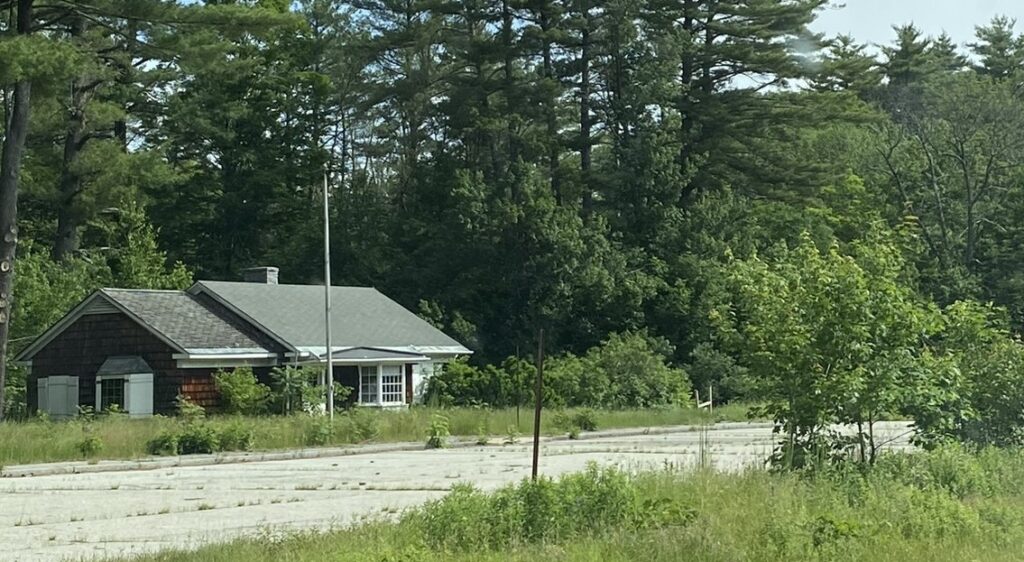
Lot Conditions can factor heavily into additional costs, and also inconvenience for an owner buying a new building or property plot if not considered prior to purchase and typically buyers don’t give a lot of thought to a parking lot unless it’s in very bad shape to start with.
Does the property you have found have a parking lot? Is it just for your business, or is it shared with an adjacent business? What is its condition? Paved? Gravel? Dirt? Something else?
If you are buying a location, is the parking lot going to need work? How much is it going to cost to repave or regrade? Does the lot slope towards your building? Or away? If it’s a gravel or dirt parking lot, how much and how often will it need fill or leveling?
Are you in an area with a lot of rain that may affect your lot’s condition? Or is it at the bottom of a hill or mountain that may have an excessive amount of melting snow/runoff in the spring?
When I worked in Vermont during the spring, the parking lots at the Ski Resort I worked at would frequently get flooded. The resort was open for business year-round and we would get some extremely grumpy customers complaining about navigating partially flooded parking lots.
If you are leasing the property, does the landlord have a history of maintaining the lot? If it needs maintenance to bring it up to acceptable use levels, is the landlord going to pay for that? And who defines “acceptable?” Make sure you get a written agreement from the landlord, and before signing anything, have a good business lawyer look over that agreement.
Why should you care about the condition of the parking area? A business with a well-maintained level of paved surface will look much more attractive to a passerby than a lot filled with enormous cracks, missing chunks of pavement, and grass tufts scattered throughout it.
Even more critical than curb appeal, the condition of the lot can impact a car driving through it (think potholes) and the walk from your lot to your business are important factors in the safety and well-being of your customers, as well as their vehicles.
If you don’t have parking on site and only street parking, paid lots, or a parking garage parking nearby, what shape are they in? Paid lots can discourage visitors if they are not in very good shape, as can parking garages. If your customers or staff are leaving late in the evening or arriving early in the morning, how safe are these locations? Are they well lit? Guarded? These factors all play into how comfortable people will be patronizing your brick and mortar business.
What are roads like locally? Are they well maintained? What condition are they in after a long winter? Are there lots of frost heaves that the town doesn’t pay attention to or massive potholes that it seems to take forever for the town or city to repair? Do the plows do a good job? And are they timely about getting out and clearing passage in regular snowstorms?
You won’t know if you are looking at the property in the spring, summer or fall, but this is where talking to residents and local businesses can help you fill in those holes in your knowledge base.
Consideration points for this chapter.
If there is a parking lot:
How many spaces do you have for the facility?
How many ADA/handicapped spaces do you have?
Are they well marked on the pavement, and via signage?
What condition is the parking lot in?
Is there also going to be enough parking for your employees?
Yes No
If No, where are they going to park?
How much is plowing going to cost in a bad winter? Don’t take average costs per winter. Base your budget on the worst winter you can get information on.
What other maintenance and repair needs are required for the lot?
What kind of shape is the lot in? Does it need a redesign and/or need work soon? If so, budget for it now.
Are there spaces set aside for pickup/delivery only? (if applicable)
Yes No
And if not, is there room to set aside and designate a few spaces for them?
Yes No
How is the lot laid out? Is the traffic flow within the lot easy to navigate or will people with oversized vehicles have trouble navigating the lot or pulling into or out of spaces?
Are there spaces for motorcycle parking? And if not, is there room to set aside or designate a few spaces for them? If you potentially have customers that may come in on bikes, you may want to consider this.
Yes No
Notes:
by Heather T. | Aug 8, 2024 | Books, Business, Business Location, Starting a Business
 Finding a Location for Your Brick and Mortar Business was just published and one of the things that I thought might be useful to do was to go into a little more detail about some individual types of brick and mortar businesses, and some specifics on what to look for when doing a location assessment.
For example, scouting a location for a new hair salon has its own variables to consider above and beyond the information in the book, as does starting a auto detailing business and while most things (in the book) are applicable to any business, I wanted to elaborate more and drill down a bit for some additional things that can help any new or relocating brick and mortar business get started when doing a location assessment.
I originally had grand plans to do these as part of the book, but with all of the different types of brick and mortar businesses out there to go over, I probably would have finished it in the next century or so and at that point we might be talking about which planet to start a business on, not which street corner. 🙂
I take requests, so while I’m going to bounce around in between business types, if you are just starting a business and would like some pointers about what to look for when doing your location assessment please reach out. Information and feedback is free but I can’t promise to not make a blog post out of it, I promise to not share any personal/business information unless you are ok with it first though.
Now onto details.
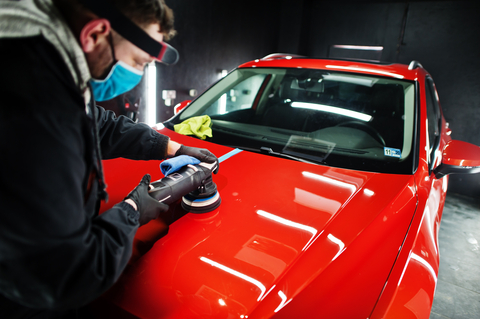
Suppose you want to start an Auto Detailing business?
Here are a few tips in addition to our recent book that might be helpful in looking for a location.
Ensure the site is easily accessible for customers and provides ample parking and parking spaces are wide enough so that people with higher end cars won’t be afraid to park in your lot. Your target market is typically going to people with a bit of disposable income who can afford to have their car detailed and tight parking which can cause door dings and other body damage can be a detractor especially for repeat customers.
Opt for a location that allows you to maintain a clean, professional appearance to attract clients. Your service is cleaning/detailing cars, a brick and mortar location that offers easy clean-up and a facade with bright colors and lots of large clean windows can help appeal from a visual standpoint plus showcase any luxury or antique cars you might have detailed while they are waiting for customers to pick them up. Don’t forget about what the neighboring buildings and businesses look like as well.
Ensure good signage opportunities to promote your detailing services. While car detailing isn’t typically a walk in proposition, you do want to make it easy for customers who have made appointments to find you and depending on your location, traffic speed on the road and other factors, how far away can people see your sign, read it and then have time to pull into your business comfortably?
Consider locations near complementary businesses, like car dealerships (new and used) or service centers, to attract more clients. Depending on your location (near water bodies or tourism areas), you may also want to consider a lot size and entrance that can accommodate customers bringing in boats (which may be detailed prior to or after winter storage) and RVs.
Auto detailing requires large amounts of water for detailing vehicles. The location must have a reliable and adequate water supply to support the business operations. The location should have access to a consistent and high-volume water source and be able to properly manage and dispose of the wastewater generated from the business, either through connection to a municipal sewer system or the ability to install an on-site wastewater treatment and disposal system.
We would suggest doing a water quality test as well, hard water can leave spots and mineral deposits on vehicles. If the location checks all the boxes but has hard water, make sure you estimate what a water treatment system will cost you to install and upkeep when doing your business plan and projected financials.
Don’t forget to check zoning regulations to make sure the location allows for this type of business.
One additional tip, additional markets to promote to that may be good customer bases are car sellers who want to get their vehicle in tip top shape prior to selling private sale, or to a dealer, so it has better eye appeal. If this is a market you want to want to pursue, an value add on would be a service taking professional pictures of the vehicle for sale and assisting with a good sales writeup for people considering private sales of their vehicles.