Volunteer Appreciation Ideas (Part 3): How to Support, Develop & Retain Volunteers
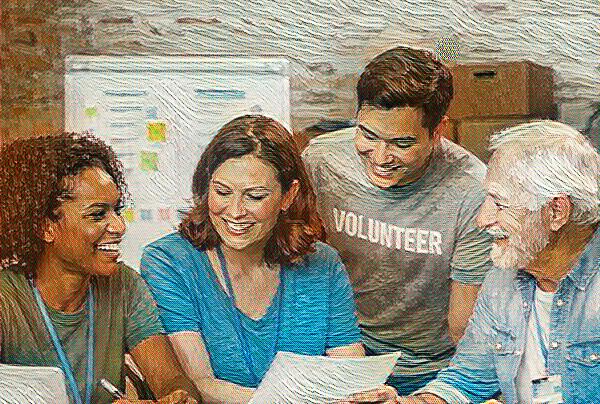
Volunteer image with volunteersThis is Part Three in the Small Thank You for Volunteers post series. Don’t forget to check out Part One and Part Two.

Being a volunteer opens up a world of new opportunities to learn new skills. Many years ago, I organized a project with over 100 volunteers. I’d wrangled smaller groups before, but this was my first large-scale project. I learned what worked well (and what didn’t) and I’ve since applied those skills to many other projects, both paid and volunteer.

Support and Development:

Offer professional development workshops and training; there are many free and low-cost opportunities that nonprofits can take advantage of. Offering these to volunteers not only can help with their own personal development but can also be a plus and strategic for the nonprofit. If you have some dedicated volunteers who are eager to learn and might be interested in learning more about marketing for example, or fundraising, those skills can only further benefit the NP. Appreciation should always be the primary motivation but it doesn’t hurt to look at the additional benefits.

Share job openings in your org first, volunteers may be volunteers because they are between jobs, may have life changes that need additional income or may just have extra time on their hands and want to put money towards something else, like retirement or other funding. Similar to hiring employees from within, your volunteers already know the organization, and if they are not interested, their network of friends or family might be interested. Caveat. If you hire a volunteer, make sure they are aware and okay with the fact that expectations may change, as well as how others view them. Volunteers sometimes get a different degree of respect from others, and how people may deal with them may be different as an employee versus as a volunteer.

Write LinkedIn recommendations. If people in the workforce plan to change jobs, LinkedIn recommendations can boost their professional standing. Business owners also benefit, as others typically view philanthropy favorably.

Invite them to staff trainings, similar to offering professional development workshops; it helps to increase their own skill sets, which can also benefit your NP.

Ask them to mentor new volunteers. Mentoring others is a great way to learn new skills. Giving them the tools to do it well helps both themselves, the mentee, and, of course, the NP.

Encourage public speaking opportunities. They say people fear public speaking as much, if not more, than death. I don’t know if I agree, but I think it comes a fairly close second. In a decade of being a member of Toastmasters, I saw hundreds of people conquer their fear of public speaking, which, when they started giving speeches, completely terrified an awful lot of them, myself included. Just like giving them some tools to be an excellent mentor, offering to sponsor a year of Toastmasters or another public speaking program doesn’t have to cost a lot, and can help volunteers overcome anxiety and fear.

Let them lead a session or workshop. Your volunteers typically have a wealth of untapped skills that a NP doesn’t know about, much less take advantage of. Having a good onboarding program can help you get a handle on their skill sets and knowledge. You could gear a class or workshop towards other volunteers, employees, the general public, or members (if your NP has membership options). If a volunteer has the knowledge but has a fear of speaking, this is a great opportunity to encourage them to experience public speaking training. Most public speaking training helps build self-confidence, not just training public speaking skills, so it’s fantastic for shyer people who have a lot of potential.

Offer mock interviews. Interviewing both as the interviewee and the interviewer is a learned skill. You may have volunteers who are job hunting or who are hunting for employees. Offering a safe space to learn and get constructive feedback on both being interviewed and the interview process is helpful on multiple levels. Just like leadership, no one is born being a great interviewer/interviewee.

Give personalized letters of reference, similar to recommendations on a LinkedIn profile. These can be very helpful to someone who is currently in the workforce, whether they are currently job hunting or could be job hunting in the future. As someone who vets people sent to me by friends and clients who ask me to research potential employees, and having talked to recruiters who also agree; a person who has gaps in work history but spends that time volunteering in the interim scores a lot higher. Offering a testimonial quote for their website (if they have a business) is also very helpful from the business owner’s perspective, as it helps promote their philanthropy.

Including them in other staff or board events also helps volunteer buy-in. Some examples are asking for input on new programs, asking for ideas on fundraising, inviting them to planning meetings, asking if they would like to be on a volunteer advisory board (with the caveat you will listen to ideas from them and implement the good ones and not have it be a sham committee), ask them to help interview new volunteers, listen and give them a voice in policy changes that affect the nonprofit.

For some fun buy-in, let them design or help design a t-shirt for the nonprofit, interview them and feature their stories on your website and social media, encourage them to submit photos, blog posts, and articles.

And last but not least, two things that can help them professionally: Invite them to go with you to networking events, and provide volunteer business cards and professional name tags. Your volunteers are some of your best cheerleaders to both spread the word about your nonprofit and to recruit more volunteers. It also makes a volunteer feel special to be acknowledged, invited, and feel like they are a valued member of your organization.

Small Gifts and Tokens:

Here are a few low-cost but meaningful ways to make a volunteer feel appreciated. Don’t just do it once or offer it one time. Small touches repeated with personal thank yous are very meaningful.

Give small seasonal gifts and include a handwritten personal note.

Give them branded pens and/or journals/notebooks.

Hand out coupons for local businesses and/or distribute discount cards from local partners.

Send digital gift cards. With a digital thank-you note.

Offer free tickets to your events. Making a volunteer pay for admission to an event you are putting on, even if they are not volunteering at it, is poor form. I’ve attended events where volunteers have come and had to pay for admittance and overheard them grousing about it. That doesn’t give a good look to the general public.

Give custom mugs or water bottles.

Provide logo t-shirts, hats, lanyards, hoodies, or other wearable swag. The goal is appreciation, but the walking branding billboard opportunity shouldn’t be discounted.

Make a small framed quote about them and post it publicly. Don’t forget to post it on your socials with a call out.

Give a mini self-care kit and include a handwritten personal note.

Create a gratitude-themed coloring book; make sure a handwritten personal note is included.

Include your logo on candles or soap, and make sure you add a handwritten personal note.

Distribute plantable seed paper notes and include a handwritten personal note.

Give a tote bag with a thank-you design. Make sure a handwritten personal note is included.

I’ll also add some things NOT to do:

Mass-blast generic thank-you email messages with “Dear Volunteer” and no personal details.

Calling out names in a long list at an event without telling a story about what each person actually contributed.

One-size-fits-all rewards. Handing out identical mugs, T-shirts, or certificates every year. The first time it’s fine, but it loses the thought year after year.

Recognition tied to labor. Thanking people by giving them more work (“You did great last month, so we’d like you to lead the next event!”).

Saying “Thanks for your help at last year’s fundraiser,” six months later, when the memory has faded.

Mentioning volunteers at the very end of a three-hour board meeting, when everyone has tuned out (or many people have already left), signals that appreciation was an afterthought.

Organizations that set up a recognition program, but leave the same person’s name posted for months and don’t update it.

Handing out things like XXL T-shirts to petite volunteers, or refrigerator magnets with outdated logos.

Thanking volunteers by tallying “hours logged,” without acknowledging impact (“Janet did 50 hours of volunteer time,” instead of “Janet sat with 12 nonprofit clients and changed 12 lives.”)

Planning appreciation dinners that require attendees to pay, take place during work hours, or fail to accommodate dietary needs prevents some volunteers from participating due to time or expense.

Saying thanks only once a year at a banquet, instead of showing appreciation throughout the year.
Small Thank Yous to Volunteers-Give back to those who give back, Part Two

Volunteer Appreciation post image: text: Thank you volunteers. We appreciate youWhile it might seem a bit mercenary, many of these thank yous can also be turned into marketing/media posts. Keep in mind it’s not just about recruitment, it’s about retention. People seeing volunteers be appreciated and having fun encourages them to volunteer. Volunteers seeing themselves get appreciated love to share online and it also helps keep them engaged. This is the second post in this series, the first one can be found here.
If you have an office or facility where the nonprofit lives:

  • Give them a dedicated parking spot for the day (putting a sign out there for all to see, is good for other volunteers and donors to see)
  • Design a “volunteer spotlight” photo wall. (don’t forget to share pictures of it on your social media)
  • Leave sticky notes of thanks on their lockers or workspaces (if you have physical space and can offer lockers). 
  • Make a gratitude wall (don’t forget to share pictures of it on social media! )
  • Print their photo (with permission) and a kind quote in the lobby/entrance. (If they don’t want a recent photo, see if they have a photo of themselves as a kid (and note that)

Comfort and Hospitality

  • Offer coffee, tea, water, and soda or juice during shifts (onsite and offsite)
  • Keep snacks stocked in the volunteer area. (And have them available offsite if doing volunteer work)
  • Offer weather-appropriate gear (like rain ponchos or sunscreen; insect repellent is also a plus)
  • Provide hot chocolate or cider on cold days (make sure there are some sugar free/low sugar/healthy options)
  • Keep spare phone chargers available (don’t forget the cords too; there are some great dual-type cords out there that can fit multiple types of phones)
  • Stock a “volunteer comfort” basket with hand lotion, sanitizer, tissues, gum, etc.(bring for offsite events too)
  • Decorate the volunteer room for holidays (if you have an office, don’t forget to share pictures of it on social media and get your volunteers involved to help decorate or make decorations)
  • Offer cooling towels in summer (and give them to volunteers as thank you gifts.)

Meaningful Gestures

  • Personalize name tags (making the first name big enough to read from several feet away is also helpful to other volunteers and anyone interacting with them)
  • Remember their favorite drink or snack. Giving someone their favorite candy bar can surprise you and make a volunteer smile.
  • Use their preferred pronouns (this goes without saying how impactful this is)
  • Ask how their day is going (just checking with volunteers gives them a chance to let you know things are groovy or something that could help improve either their nonprofit volunteering experience and your nonprofit)
  • Celebrate small wins with them (let them know about testimonials that come in, feedback from events, big and small donations, let them know the work they help with makes a difference)
  • Invite them to share feedback (feedback is a gift; you want good feedback and feedback that may say you need room for improvement. Some volunteers may not feel comfortable putting their names on things passed along, so offer the opportunity for anonymous feedback. Google Forms is a great way to have specific questions asked and also have open areas where volunteers can add information and remain anonymous)
  • Offer “thinking of you” notes and send cards during tough times (cards are old-fashioned, but they are meaningful, and it only takes a minute to write one out. A fun added community volunteer project is to make cards, and some of these can be used as well)
  • Ask for their opinions in planning (coordinators and primaries of many nonprofits don’t think to ask for input and ideas from volunteers, especially for events. I’ve found you get some of the best ideas, the best feedback, the best workarounds of past problems (and maybe not aware there were problems prior) in asking volunteers to give some of their opinions and let’s not forget many of them have untapped expertise)
  • Send a welcome letter before their first shift (It could be an email too, but acknowledging someone just coming in for the first time makes a volunteer feel welcomed right from the get-go.)
  • Call just to say thank you (you can never tell volunteers thank you too many times)
  • Remember their interests and ask about them (this is where having an onboarding interview and an onboarding questionnaire
  • Give a personalized book recommendation (see above)
  • Gift them a small plant with a tag saying, “Thanks for helping us grow” (small gifts that are meaningful are a wonderful way to show appreciation, especially ones that a volunteer can nurture)
  • Make a small keepsake or ornament for them (something relevant to the nonprofit is always fun.)
  • Make a custom crossword or word search with their name in it (there are multiple free tools online to make these, just do a Google search for the sites)

Fun and Celebration

  • Host a game night (during volunteer onboarding, it’s a great question to ask (what they like to play) and also what kinds of things might be of interest for group activities)
  • Organize a “just for fun” volunteer outing (see above suggestion, but things like hiking, going bowling, going to see a show concentrate on things that are low cost whether you are paying for everyone or everyone is going Dutch)
  • Create a bingo card with fun volunteer moments (this could be things like volunteered at the Apple harvest festival, or helped with a game booth, or helped prepare someone to speak at an event)
  • Give small seasonal gifts (e.g., candy canes, pumpkin spice tea)
  • Host a trivia contest (go one step further and make the trivia questions, questions about the nonprofit. It helps buy in and helps volunteers get to know the nonprofit better)
  • Make small award certificates (while this might seem silly, it can still be fun for volunteers to be appreciated for things: e.g. best handwriting for a homemade sign boards, best group photo social media taker, you could give a golden heart award for someone who always shows up with kindness, a spark plug award for the person who energizes every room they are in, a sunshine award for the volunteer who brightens everyone’s day, the MacGyver award for someone who can fix anything in a pinch, the early bird award for the volunteer who always arrives first, the GPS award for the volunteer who knows exactly where everything always is, the tech work whisperer award for the volunteer who always saves the day with technology, etc.)
  • Throw a mini birthday party (you could have a birthday party for everyone who has a birthday that month, some homemade cupcakes, a little ice cream and have some cards that everybody else can sign for everyone having a birthday that month)
  • Celebrate holidays (e.g.,Martin Luther King Day of Service, national volunteer week, global youth service day, Earth Day, World Environment Day, Juneteenth, which is also a day of community care, international day of charity, world mental health day, make a difference day, giving Tuesday, international volunteer day, national volunteer month, random acts of kindness day/week, world, cleanup, day, national day of Hope)
  • Have a volunteer karaoke night (with digital technology at our fingertips we don’t need to rent karaoke machines anymore, and if it’s a small group, you don’t need a microphone, if you have a bigger group, but a low budget, you can also use a computer mic and route the sound of people singing through a computer with some speakers)
  • Invite them to be in a fun team TikTok or Reel video (encourage them to dress up in any branded apparel that you might have so you can also use this for advertising, but make this a fun event for volunteers. The marketing is secondary)
  • Set up a photo booth (most photo booth rentals come with props, but this can be a fun activity for volunteers to do together and make some homemade props)
  • Run a “mystery treat” day (in your volunteer getting to know you interviews, (see next blog post) find out if volunteers have allergies or severe dislikes, this helps everyone be able to enjoy the treats, home made Rice Krispies treats are pretty much always a winner)
  • Do a themed dress-up day (if the nonprofit has a mascot or an image as part of its logo, that’s an easy one; if not, what represents the nonprofit the most? Feeding the hungry, volunteers could dress up as fruits or vegetables; a pet rescue, volunteers could dress up as animals; a home repair nonprofit, volunteers could dress up as tools, etc.)
  • Host a movie night (find a feel good movie that will appeal to everyone and have positive messaging. Movies like the Iron Giant, while animated, hit the heartstrings. The Soloist, which is based on a true story about a journalist helping a homeless musician. A few more: The Peanut Butter Falcon, The King’s Speech, Pick of the Litter, The Martian. Finding Forrester and Soul)
  • Give out temporary tattoos or buttons (temporary tattoos are not expensive to order and are also useful to give out at events for the kids (and adults) and buttons are also inexpensive to order and/or make. A logo is good to incorporate, but if you have a short tagline to include if the logo doesn’t get the point across of what the nonprofit does, don’t be afraid to include it)
  • Let them vote on a celebration theme (many nonprofits have 5, 10, 15 years and more anniversaries and other events that they might celebrate, include your volunteers in the discussion, don’t keep the discussion to board members and employees)
  • Run a “guess the baby photo” contest (once a month or once a week *if you have a lot of employees. Give a small prize to the first person who guesses the right answer)
  • Do a “volunteer pet of the month” slideshow (put it on your socials, ask permission first though please before posting as to what to include for information. For safety reasons don’t tag your volunteers and don’t name the pets)

Recruiting and Retaining Volunteers for Nonprofits

Last week I ran a SCORE workshop on Recruiting and Retaining Volunteers for Nonprofits and there were some things I touched on that might be helpful for any nonprofits (based on feedback from my attendees) to think about as many people on the call were unfamiliar with them.

Often there is a discount between volunteers and the people running and organizing the nonprofit and it usually starts from the beginning when a volunteer first starts volunteering with an organization.

Many nonprofits I have worked with over the years don’t have a system or documentation in place for this. But some do and it will only help a nonprofit have outlined and to go over with new volunteers the expectations of what a volunteer will do, as well as the training expectations a volunteer may go through.

There are some simple bullet points that are key to volunteer communications.

  • Clearly outlined
  • Clearly explained
  • Expectations
  • Clear direction
  • Do and Don’ts

Onboarding Checklist:

I also suggested an onboarding checklist for new volunteers and most of the nonprofits on the call were not familiar with the concept, so I came up with sample one based on the many nonprofits I have worked with over the years.

This is in Google docs, but can be downloaded as a Microsoft Word Document by going to the “File” menu in the top bar, then to “Download” and the submenu will give you the option to download it as MS Word.

ASK Principle:

Something I have used for years with volunteers, I call the ASK principle. I know there are variations of this floating around but I’ve found this works well.

ASK (Ask questions, Seek to understand, Know how to listen)

When applying the ASK Model within a nonprofit, it’s about creating a two-way dialogue that values volunteers’ inputs, addresses their concerns, AND strengthens their connection to the organization.

A: Ask Questions

Objective: Engage volunteers by soliciting their opinions, needs, and preferences to tailor the organization’s offerings and communications effectively.

Example: Using a volunteer survey (it can be anonymous) to seek feedback.

S: Seek to Understand

Objective: Dive deeper into the feedback or concerns raised by volunteers to genuinely understand  their experiences and expectations from the organization.

Example: As a result of the volunteer survey, you follow up with ALL of your volunteers to go over the feedback results, positive and negative.

K: Know How to Listen

Objective: Actively listen to what volunteers are communicating, both verbally and non-verbally, to acknowledge their feelings and show that their voices are heard and valued.

Examples: While volunteer one-on-one meetings can be very insightful, if a volunteer is having a problem or issue with a supervisor or volunteer leader, they may feel reluctant to share. If it’s regarding another volunteer, they may feel like it’s telling tales out of school, or the reluctance factor may also be there because they may not know of any prior relationships the person they are speaking with may have with the person in question. Are they buddies, do they do things together, etc. I always recommend to nonprofits and business owners as well is if there is a management issue, have more than one person talk to the person experiencing some challenges. People may open up when speaking with someone else and other details may also emerge that were not touched on in the initial conversation.

Volunteer group meetings can also be very productive, but sometimes can be counter-productive if one or two people monopolize the floor. Having someone that can act and be impartial, a “Switzerland” so to speak, as a moderator, can help keep people on track and let others speak.

I’ve always found when listening to volunteers, it works well to echo back to a person, whether in a one-on-one setting or a group, “this is what I heard you say.” Is this correct or did I mishear or misunderstand? 

This accomplishes three things, one it reinforces to the speaker that you were actually “listening” to them, two, it helps you better understand an issue or problem when you have to repeat it, and three, echoing back makes sure that what the person is “actually” saying is understood correctly. 

They might have said, we are having a problem with a volunteer leader because they don’t respond quickly to phone calls or emails, YOU might hear, well they are having a problem with the volunteer leader, and they are unhappy but not specifically WHY or the WHY maybe misheard or in a lot of cases misinterpreted. 

Volunteer Personas:

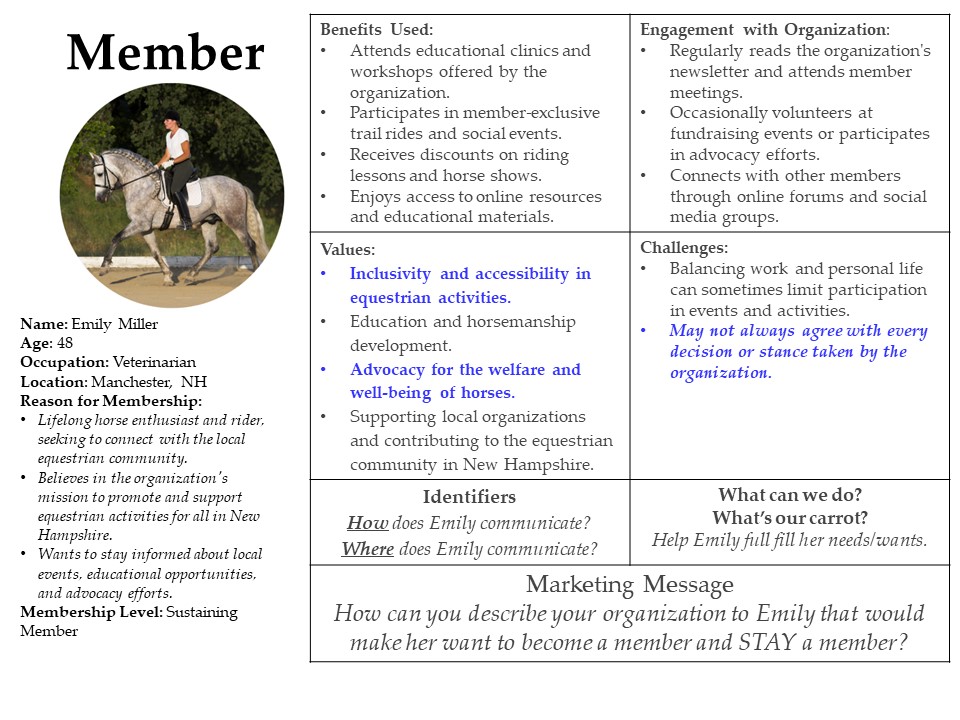
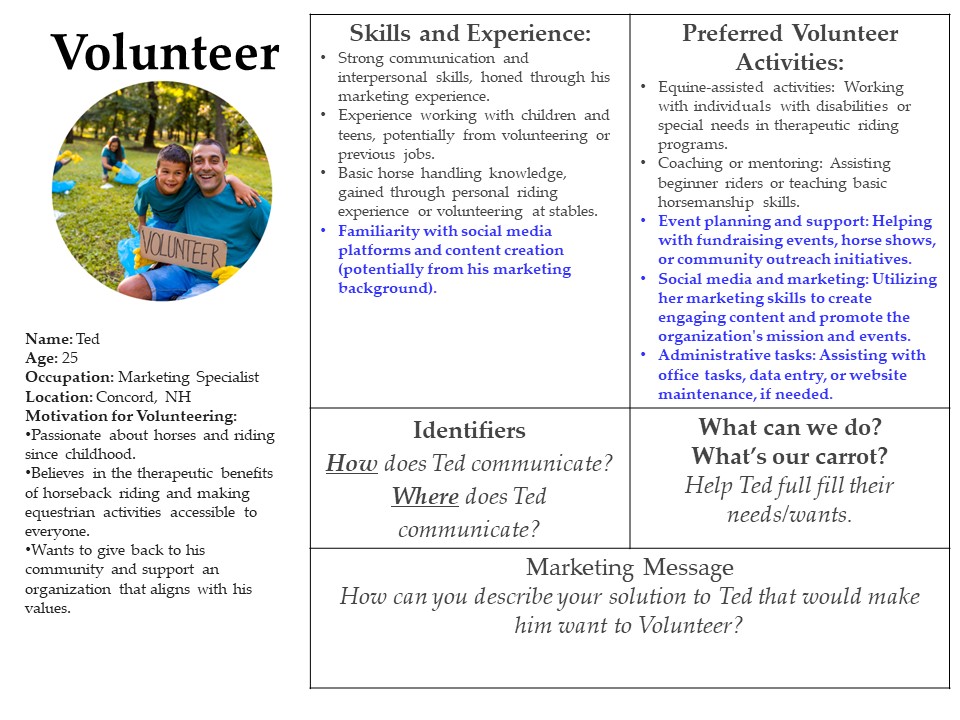
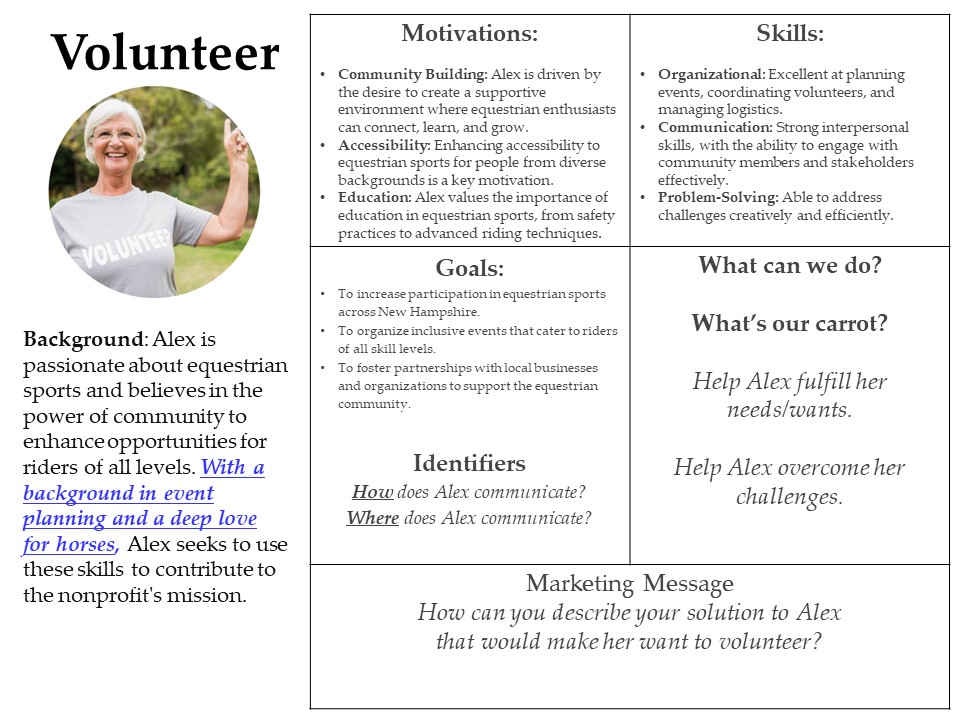
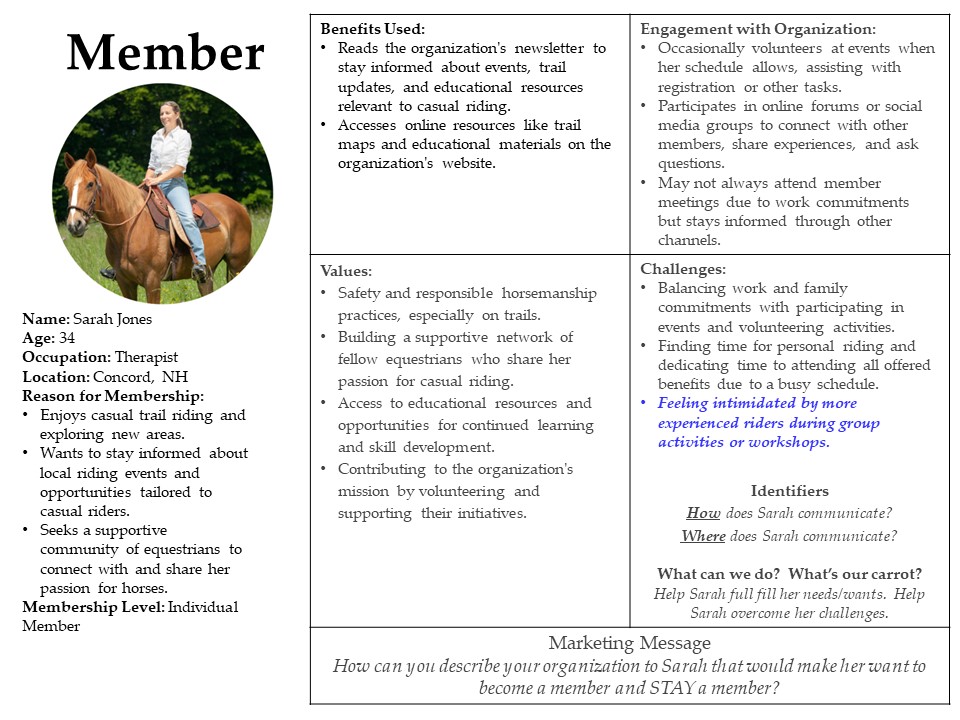
In 2022, I had written a blog post about customer personas and using social media to data mine for information. Customer personas can be extremely useful for creating customer profiles, but they can also be very useful to nonprofits.

You can use the same concept and create volunteer profiles and member profiles (if your NP is membership based) and that can help with recruitment of both. These examples are ones I created for a horse nonprofit organization as examples for a prior presentation.

As follows are two examples each of a volunteer persona and member personas.

Sample NP Member Persona Sample NP Member Persona Sample NP Volunteer Persona Sample NP Volunteer Persona

S.W.O.T. for Nonprofits:

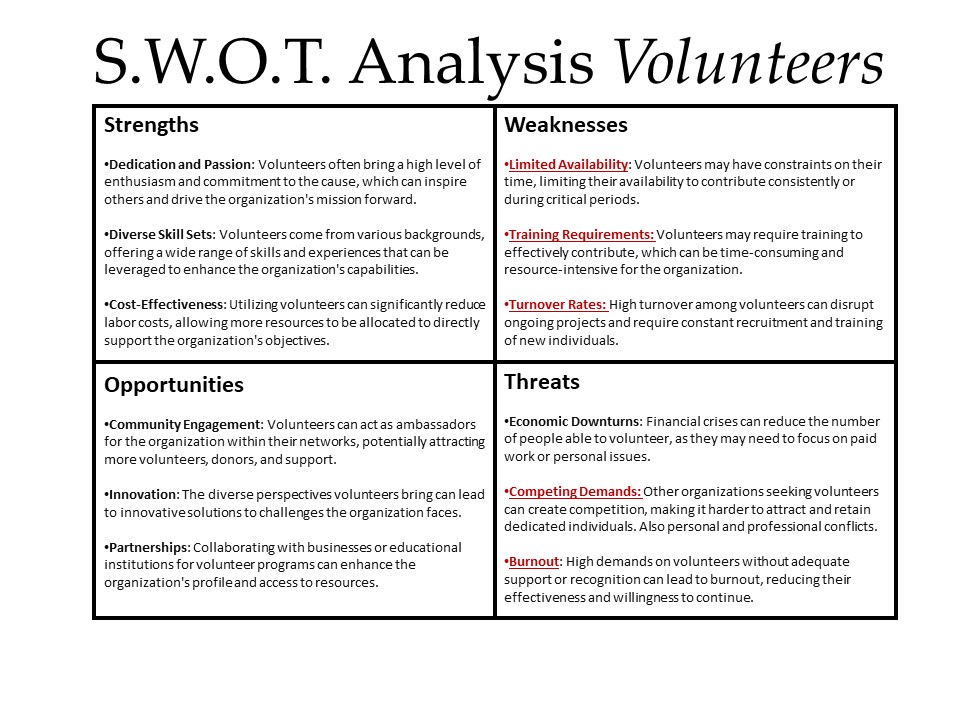
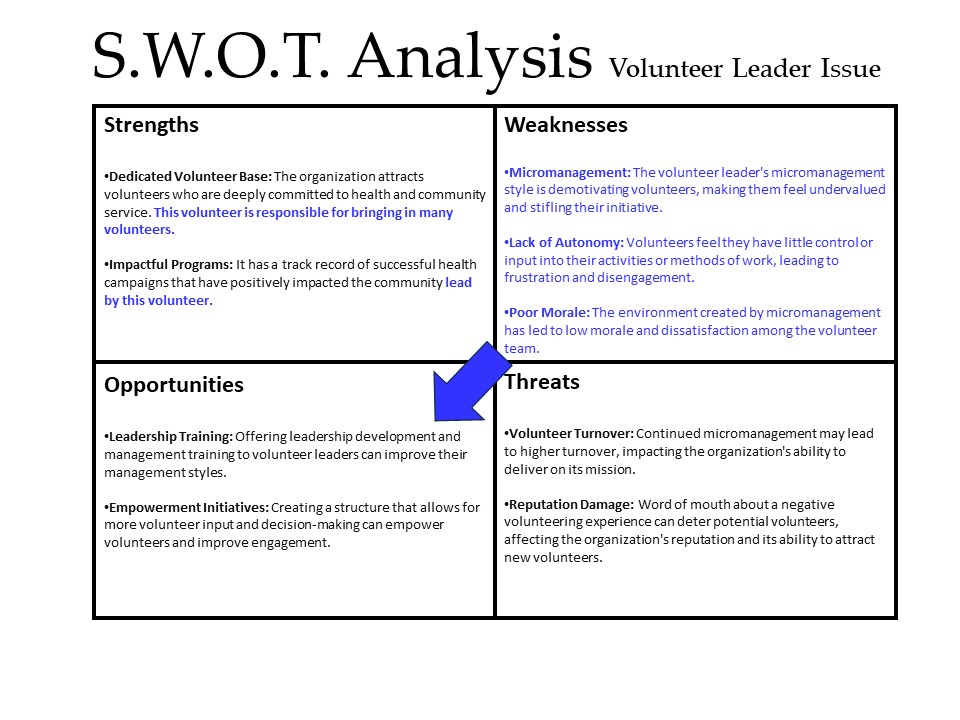
I also want to add, the benefit of using S.W.O.T. (Strengths, Weaknesses, Opportunities, Threats) analysis can also be very useful for a nonprofit and can analyze volunteers, board makeup, volunteer leaders, members, the organization itself, fundraising and help identify things going on in the organization that might need attention.

Having your board of directors do this in conjunction with your Executive Director and Committee Members helps to get lots of insights, different viewpoints and, in many cases, inspiration and direction.  

These two examples are ones I’ve done on various nonprofits over the years that I have either volunteered with or worked with as a personal business client.

S.W.O.T. Analysis Volunteers S.W.O.T. Analysis Volunteer Leader Issue

I hope some of these tools are helpful as an organization goes through their nonprofit journey.